
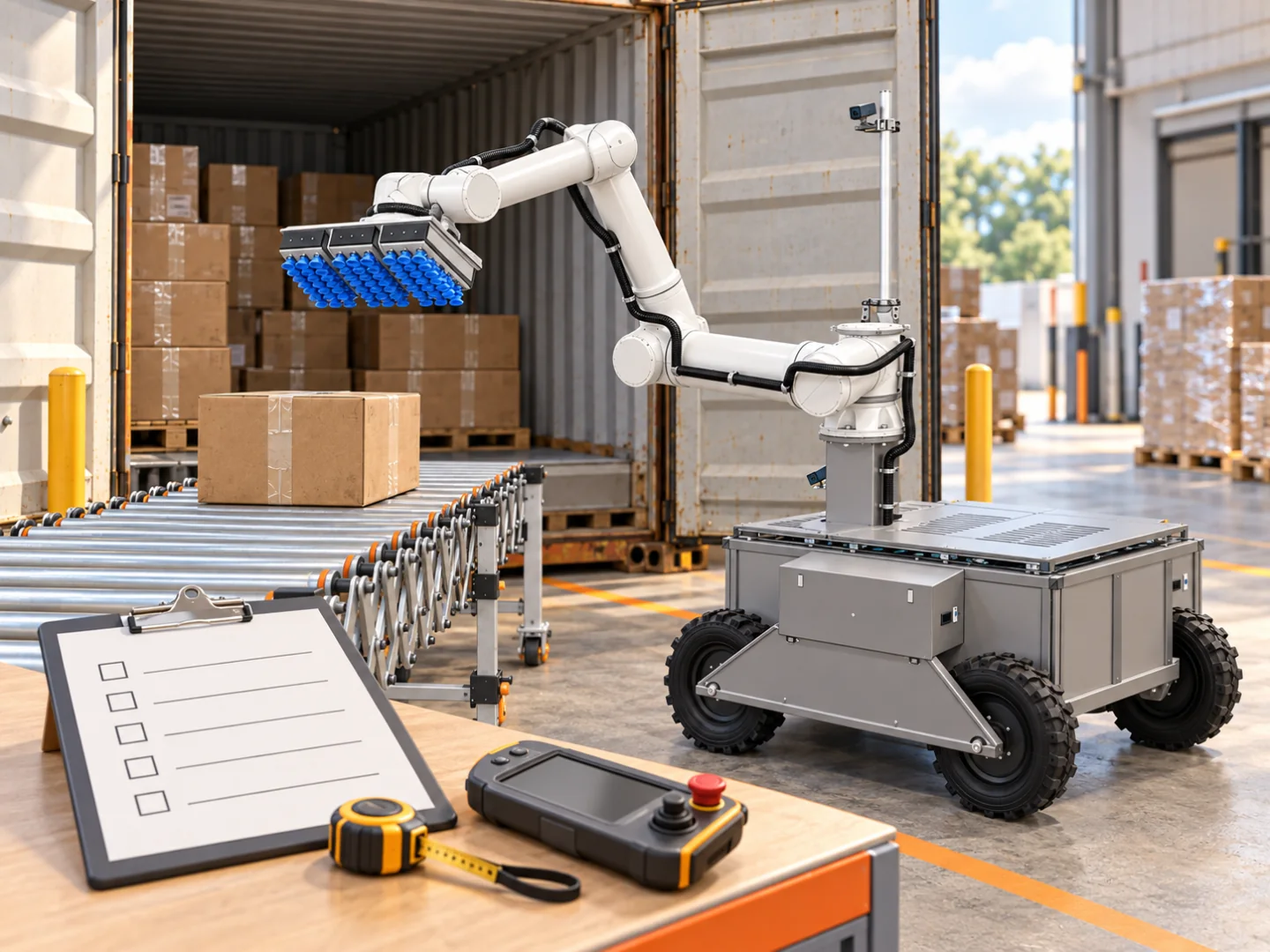
Container unloading robot pilot: the integration acceptance checklist
Plan a robotic unloading pilot with an acceptance checklist for objectives, freight, safety, data, ownership and handoff. Agree test measures and a decision.
ReadGuides and articles on cost, freight suitability, and robotics pilots. KRONA U1 unloads containers and loads them with boxes from pallets or conveyors.
Choose the question you are working through. The full library follows below.
Compare your current unloading cost with a robotic scenario.
Plan a robotic unloading pilot with an acceptance checklist for objectives, freight, safety, data, ownership and handoff. Agree test measures and a decision.
Read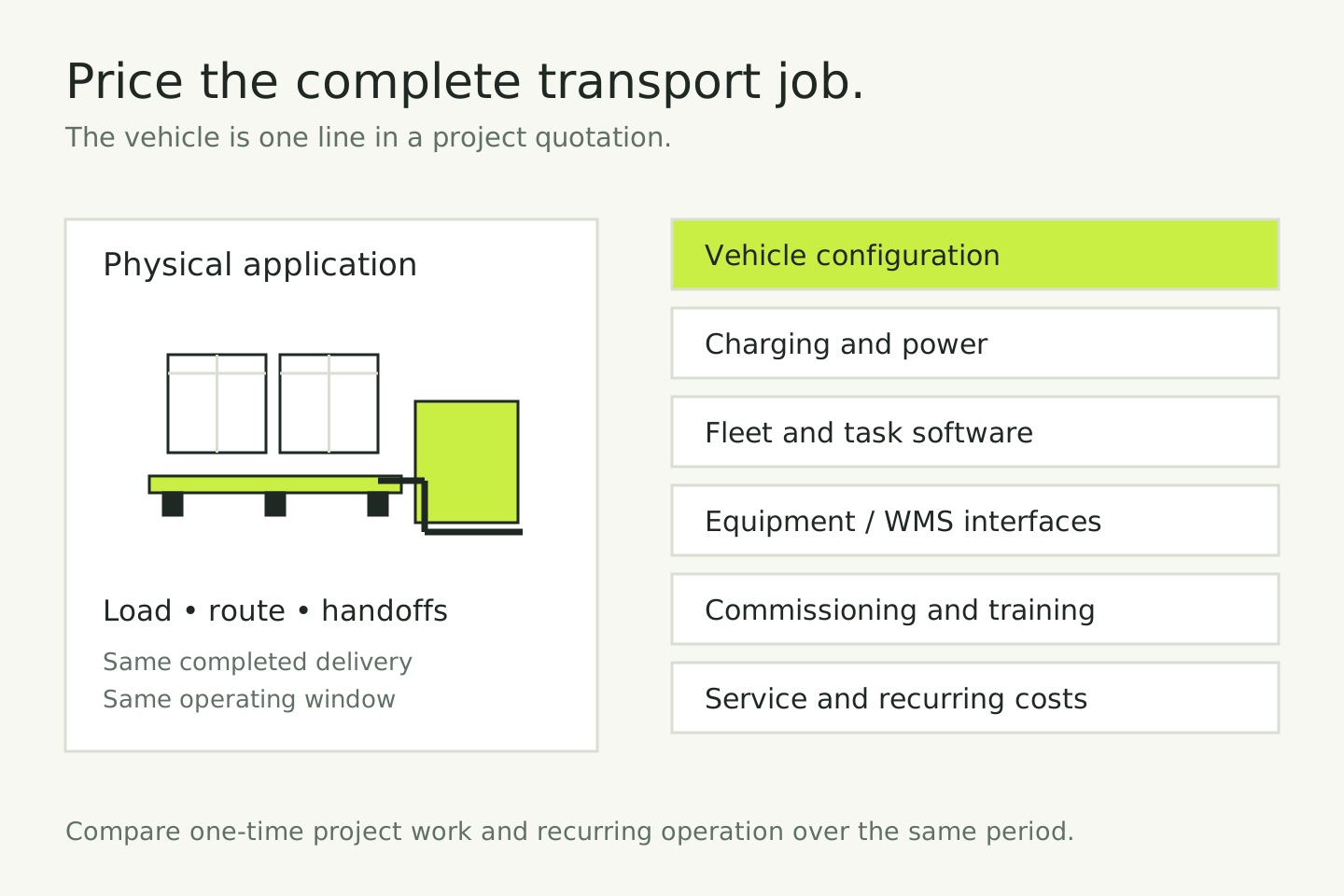
Compare AGV forklift costs across vehicles, charging, software, integration, commissioning and service. Prepare a brief for a complete KRONA proposal.
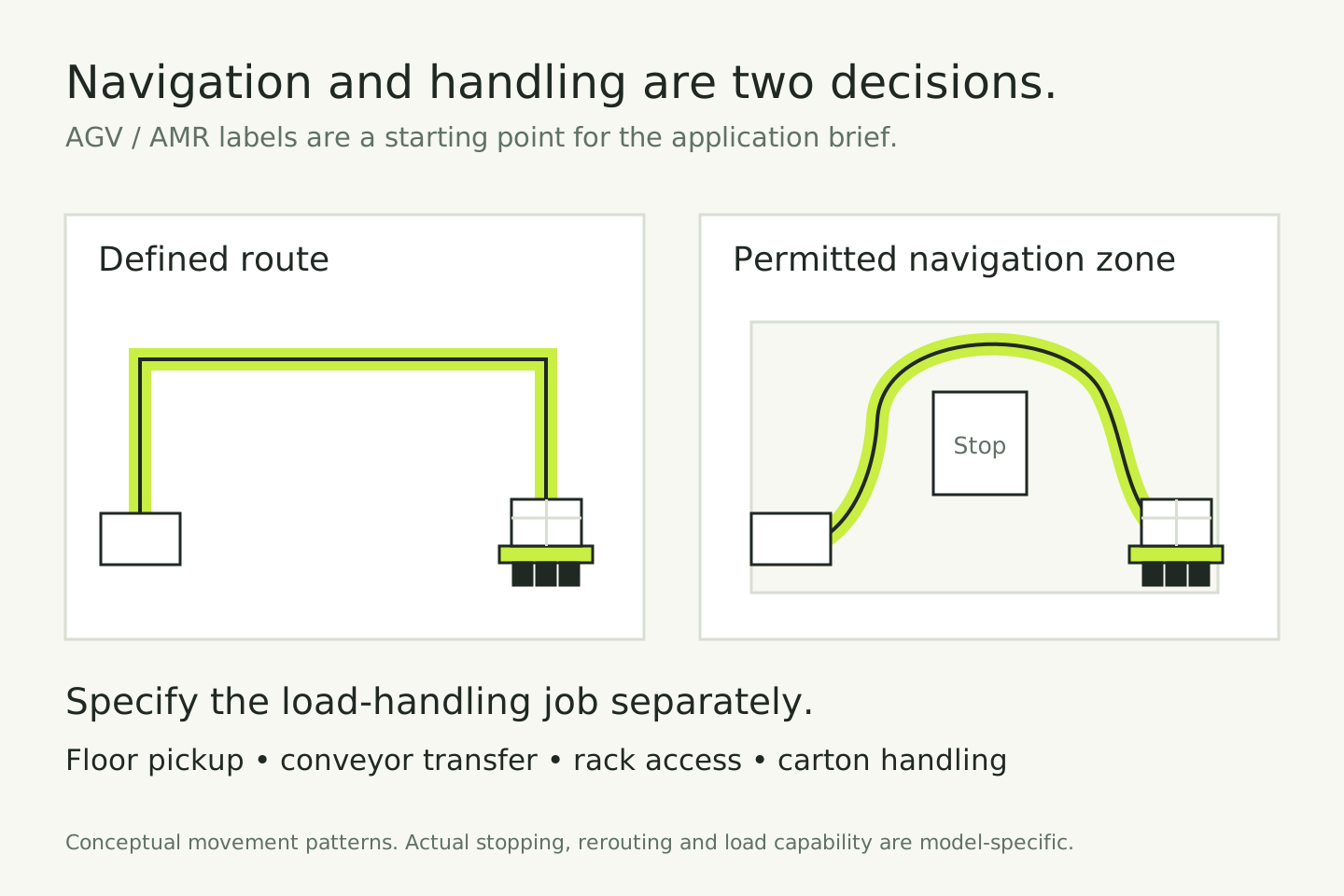
Compare AGV and AMR navigation without confusing it with forklift capability. Specify pallet pickup, route behaviour, handoffs and recovery for your warehouse.
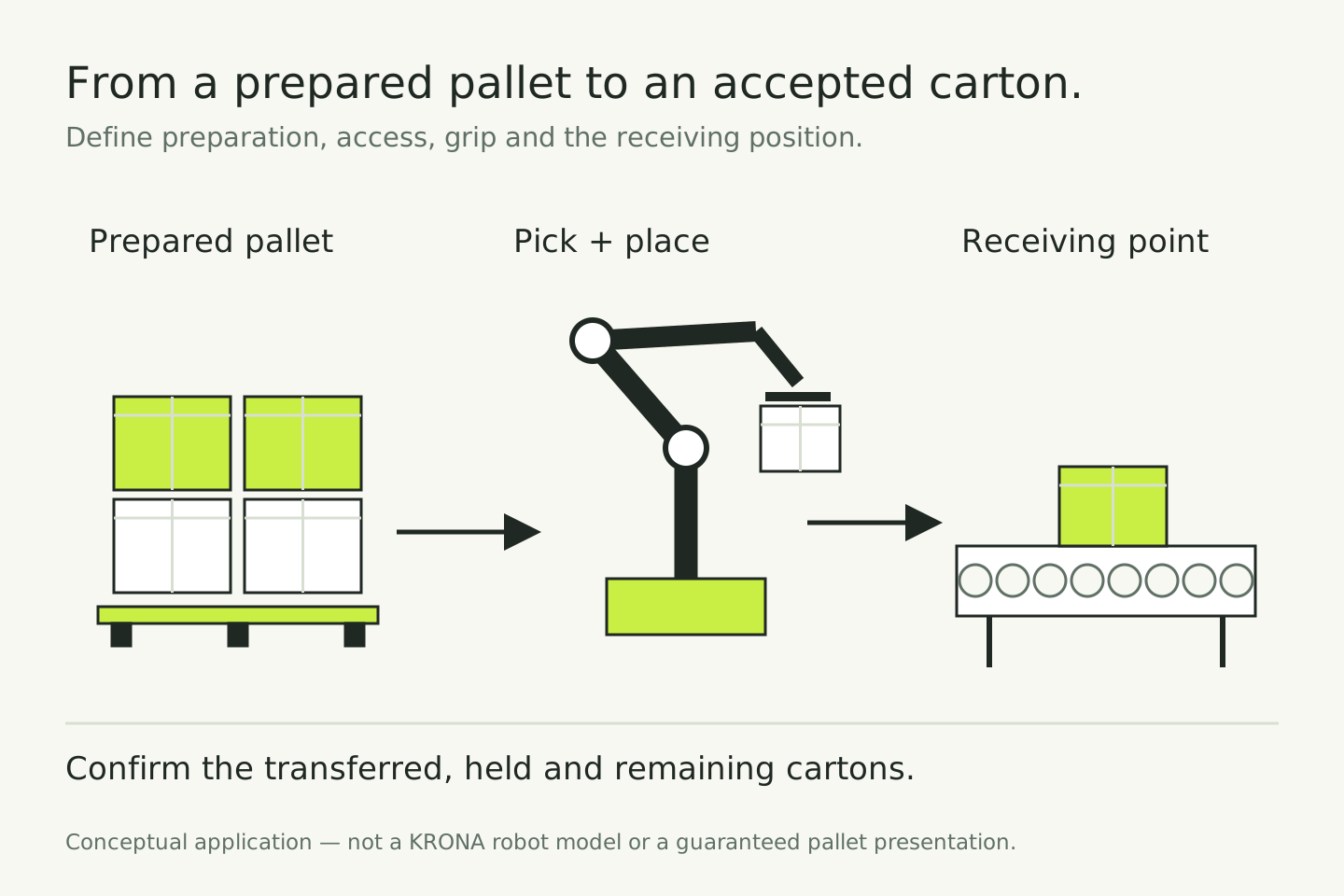
Plan carton depalletizing from known or mixed pallets to a conveyor or loading process. Specify carton access, preparation, identity, handoffs and recovery.
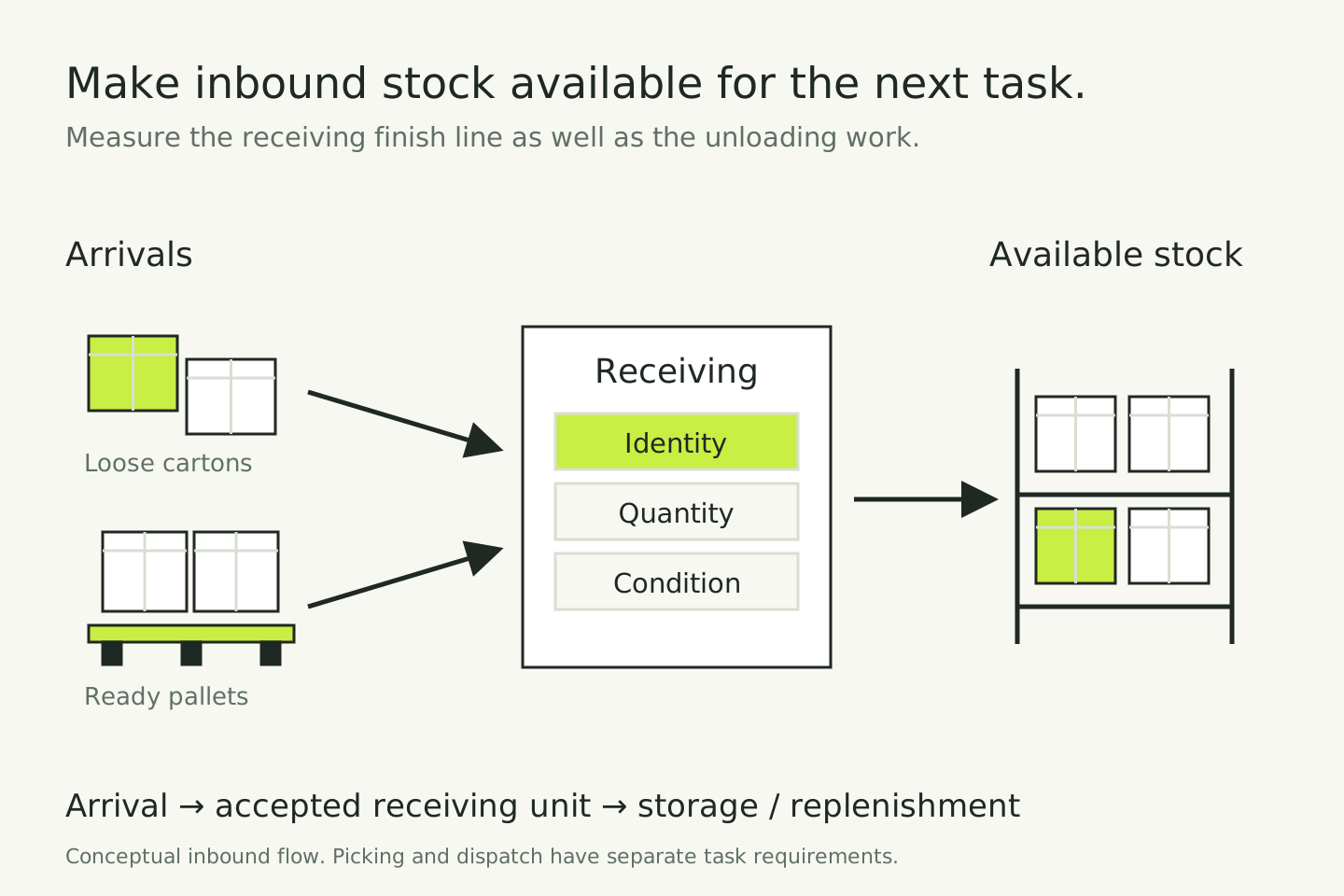
Plan ecommerce inbound automation from container unloading to accepted stock and pallet movement. Compare receiving capacity and replenishment deadlines.
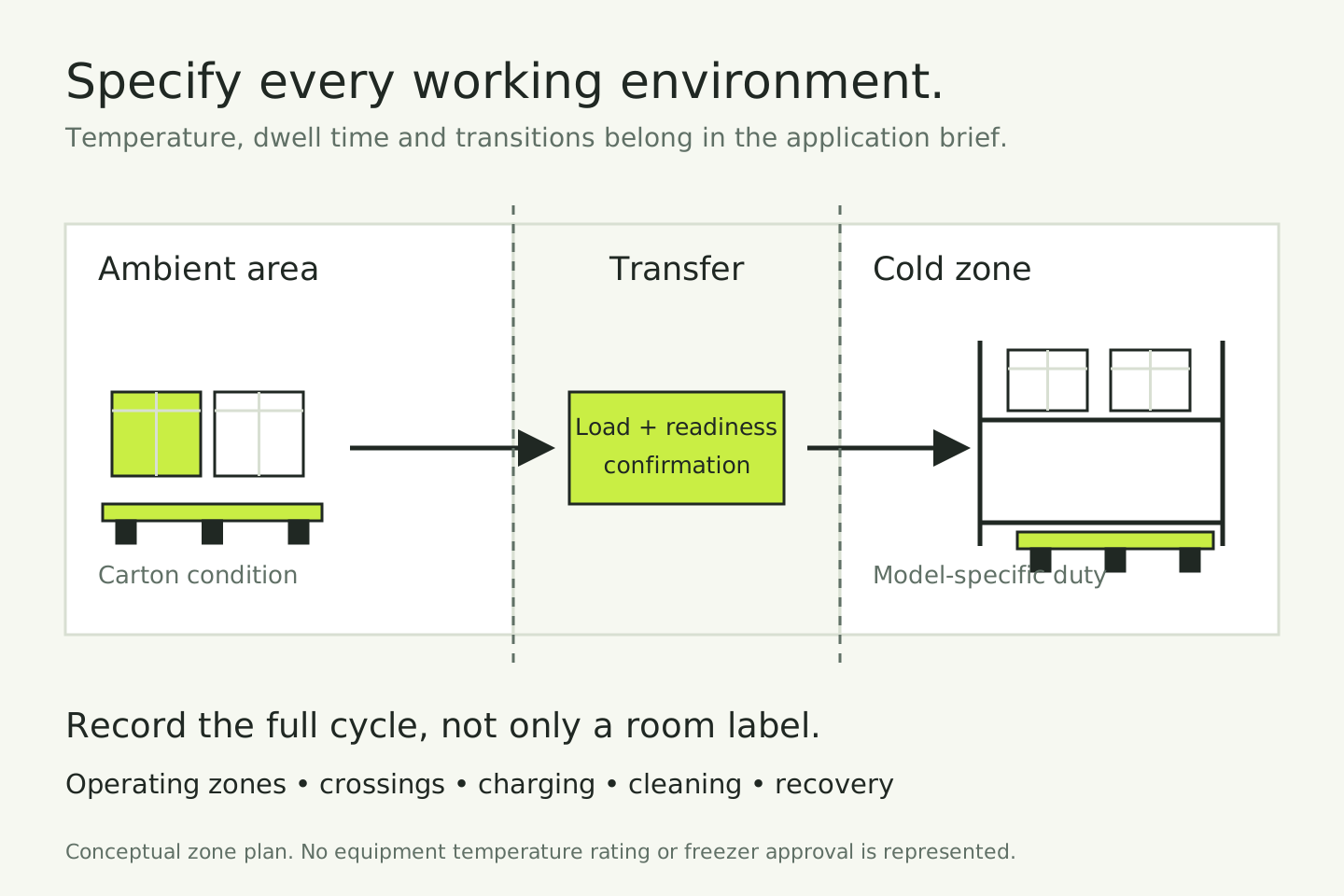
Assess food and cold storage automation by carton condition, temperature exposure, pallet routes and receiving rules. Prepare model-specific requirements.
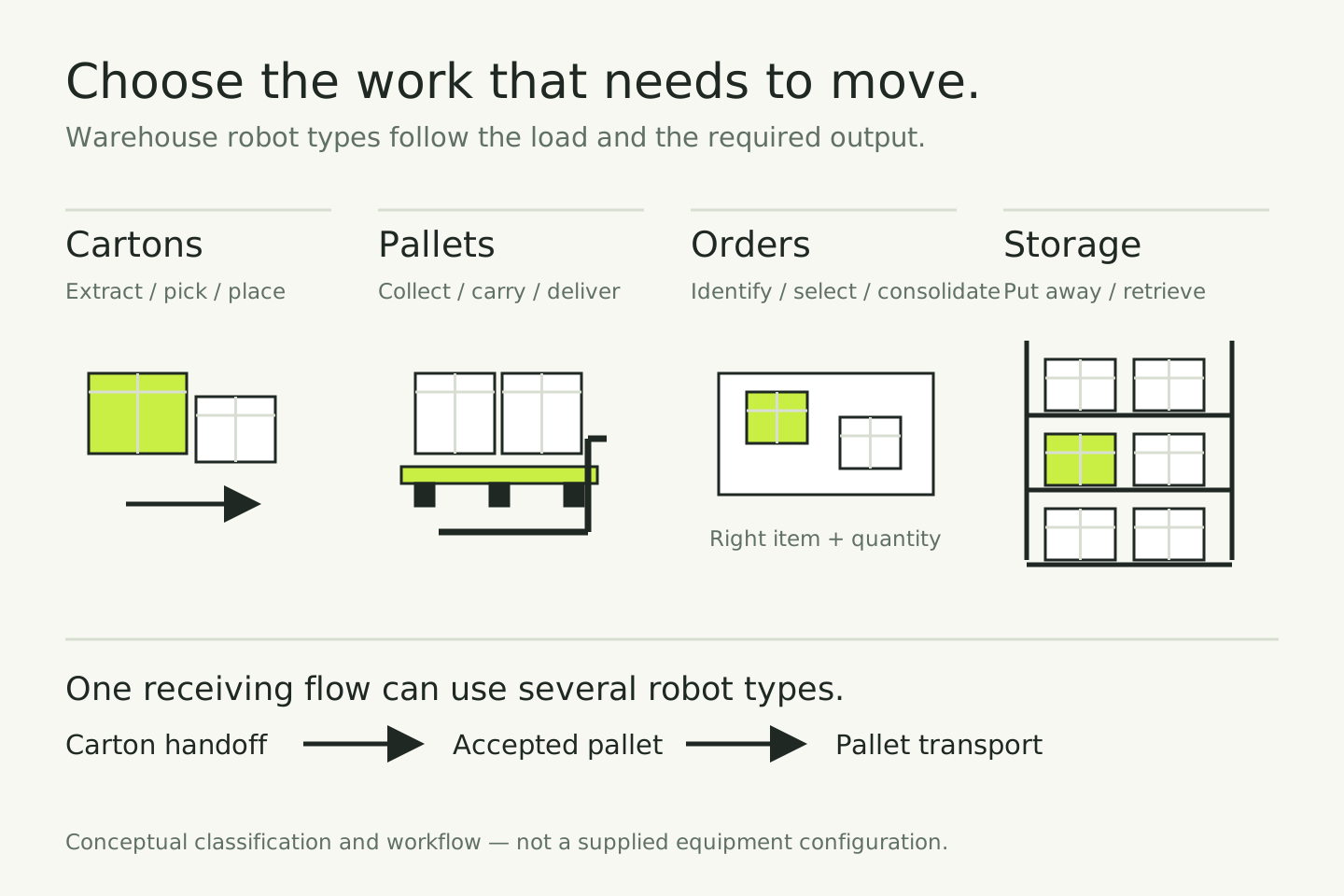
Compare warehouse robots for carton unloading, pallet transport, palletizing, picking and storage. Define the load, handoff and workflow before selection.
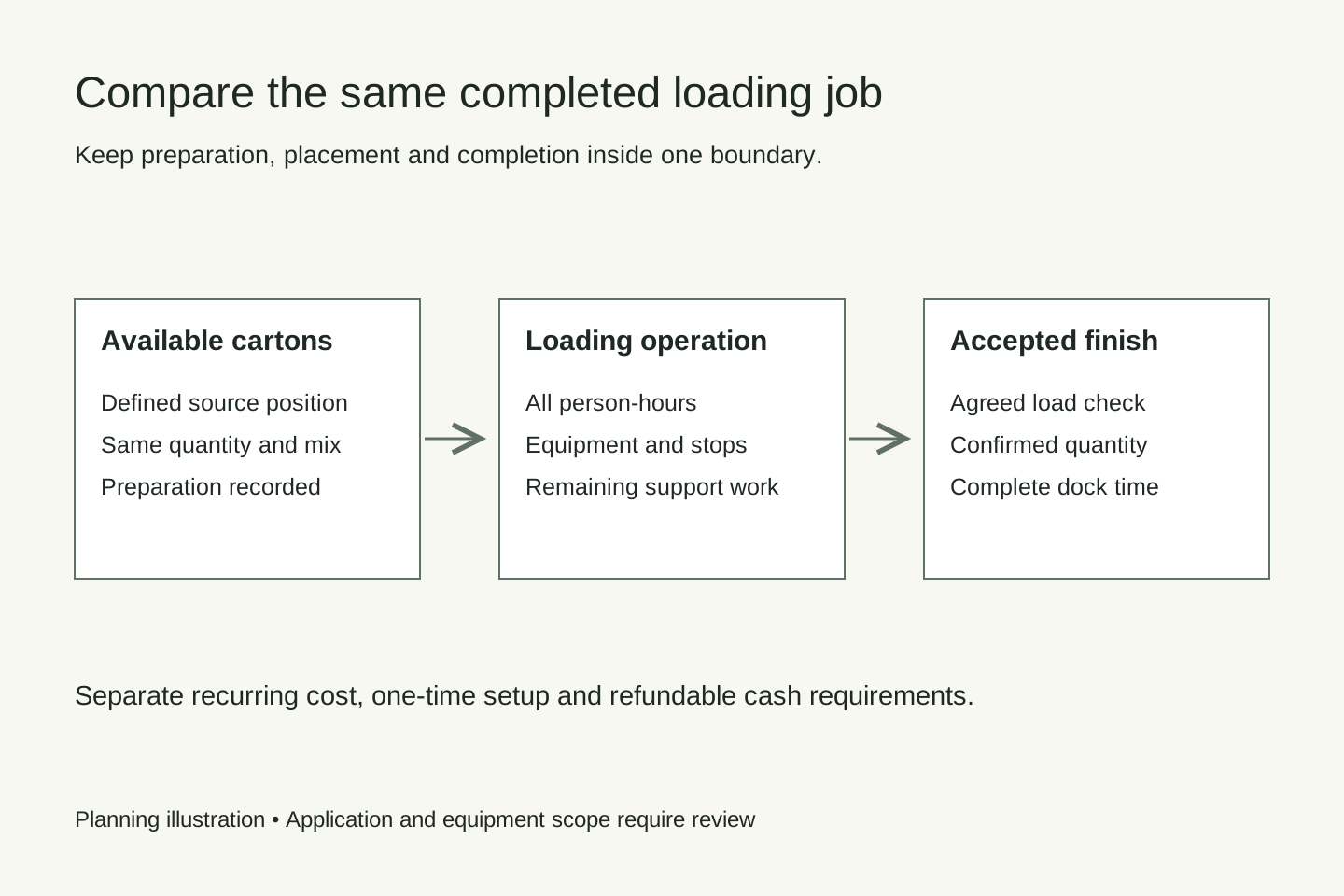
Compare manual, conveyor-assisted and robotic carton loading using the same completed job. Account for labour, stops, setup, equipment and remaining work.
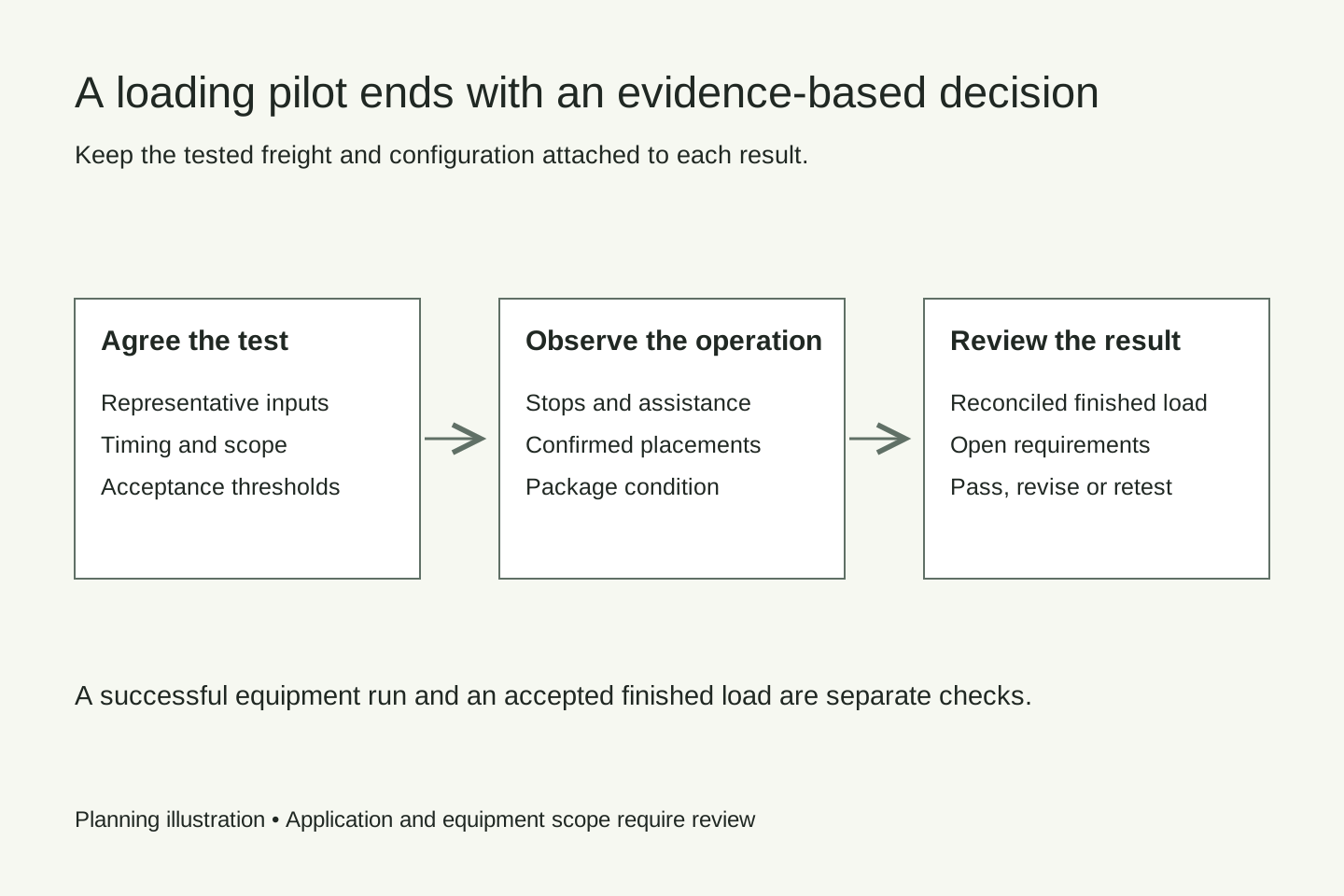
Agree loading pilot inputs and acceptance measures before testing. Record complete loading time, assistance, exceptions, carton condition and load review.
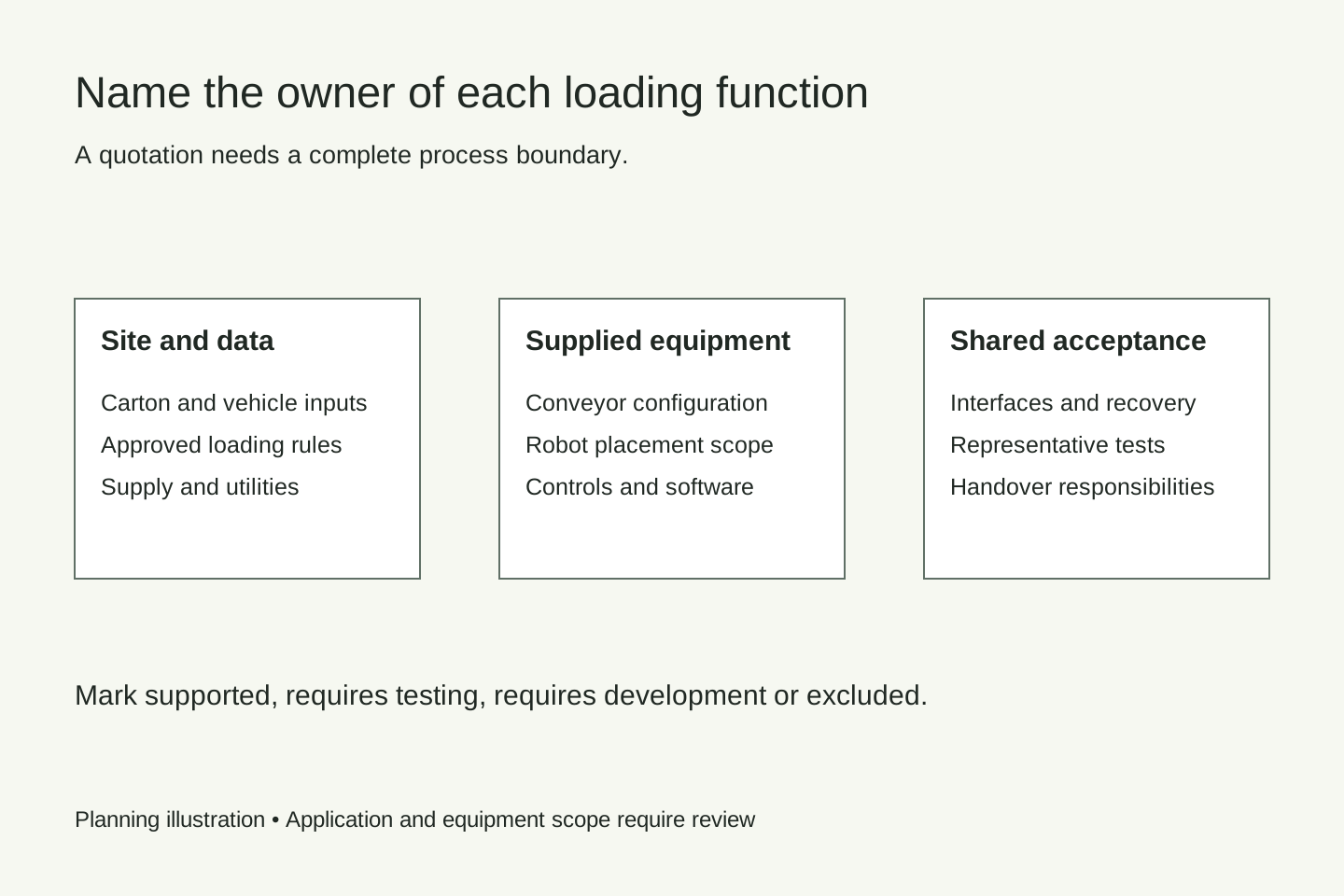
Prepare a loading-system request for quotation covering cartons, vehicle geometry, supply sequence, controls, scope ownership and agreed acceptance tests.
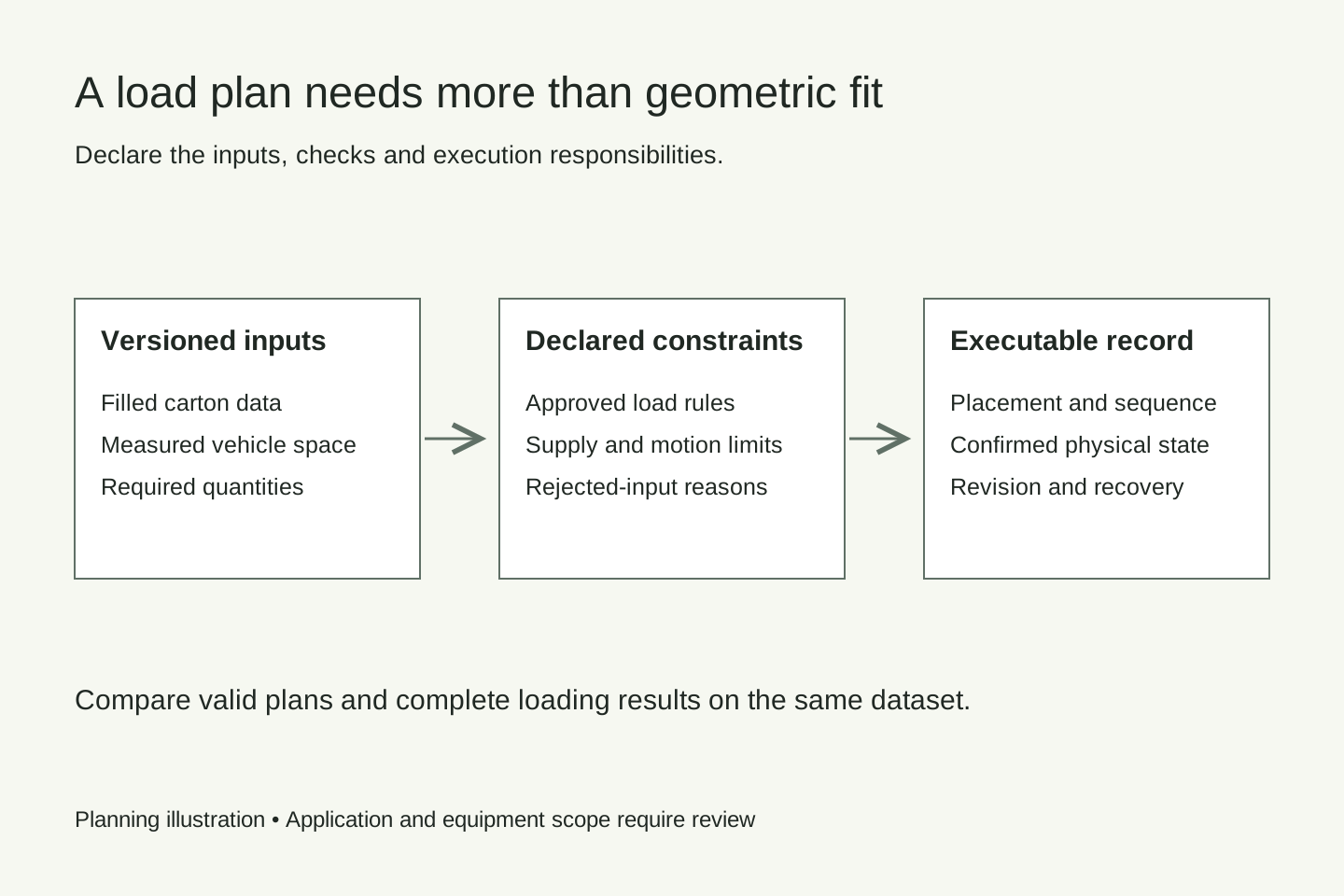
Evaluate a loading plan beyond a 3D fit: carton rules, vehicle limits, feed order, robot access and recovery. Prepare a software requirements checklist.
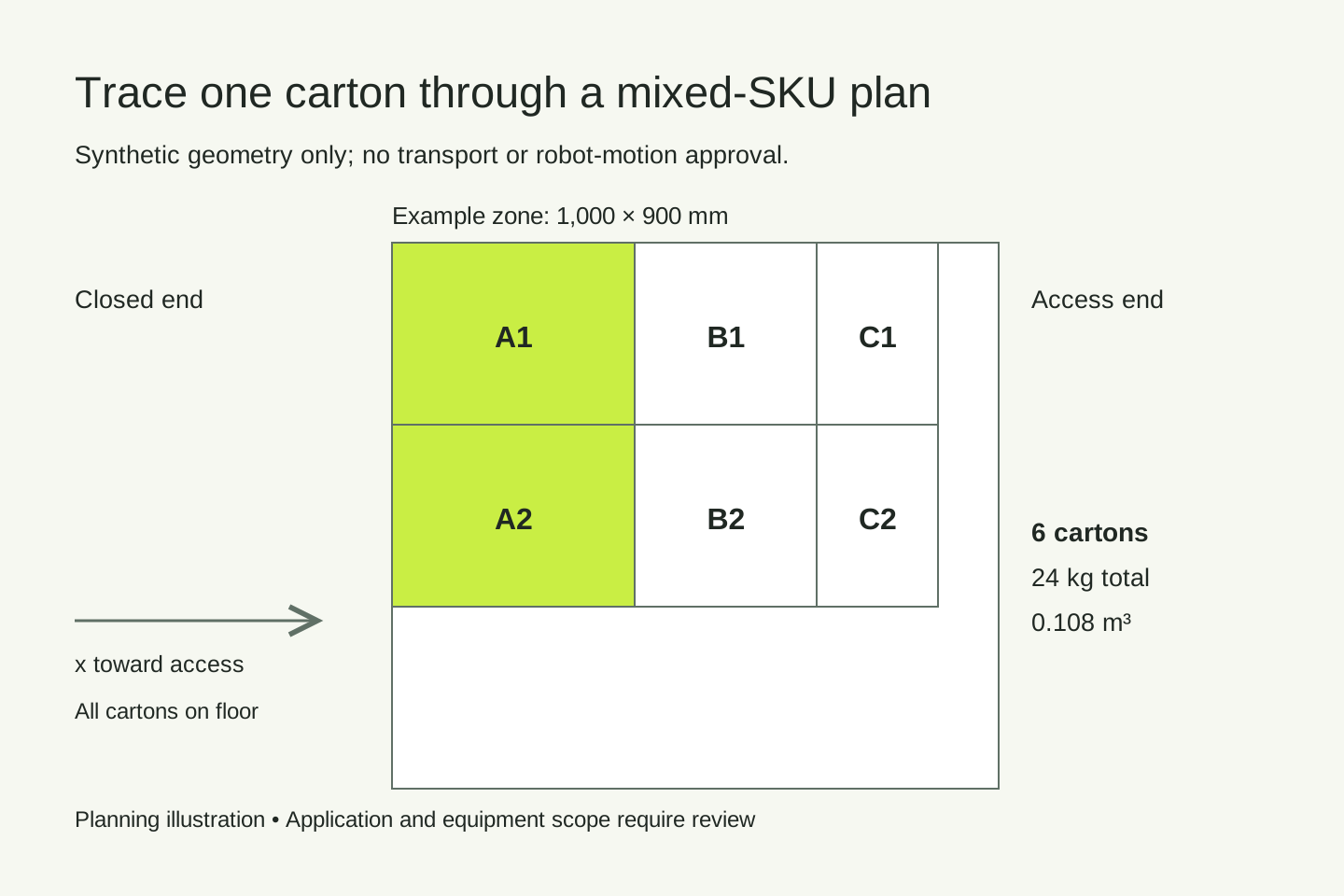
Build a mixed-SKU loading brief from carton data, handling rules and supply order. Follow a worked example and record exceptions before the loading trial.
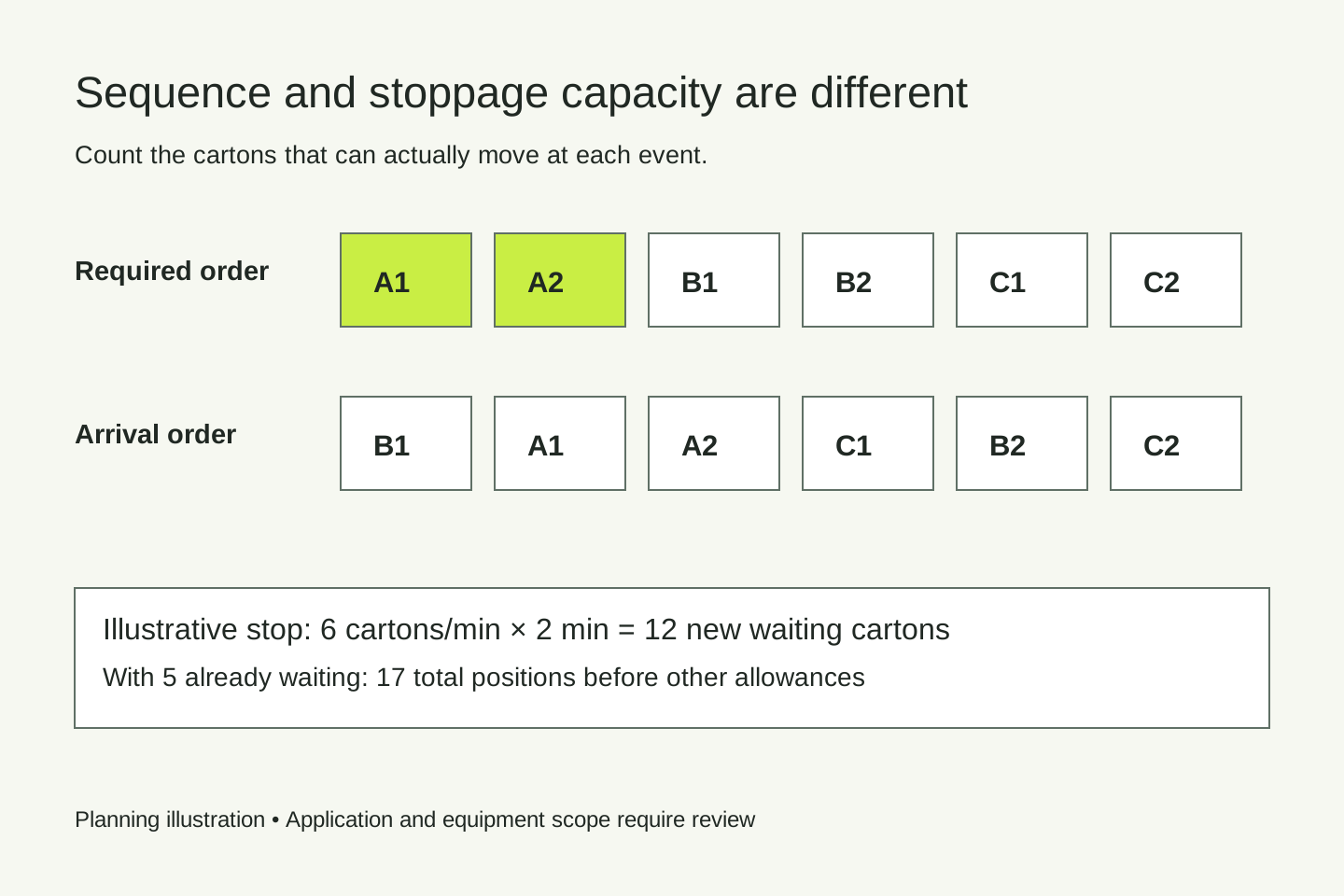
Match carton supply to the truck loading sequence. Separate reorder positions from stoppage capacity and test late cartons, blocked flow and safe restart.
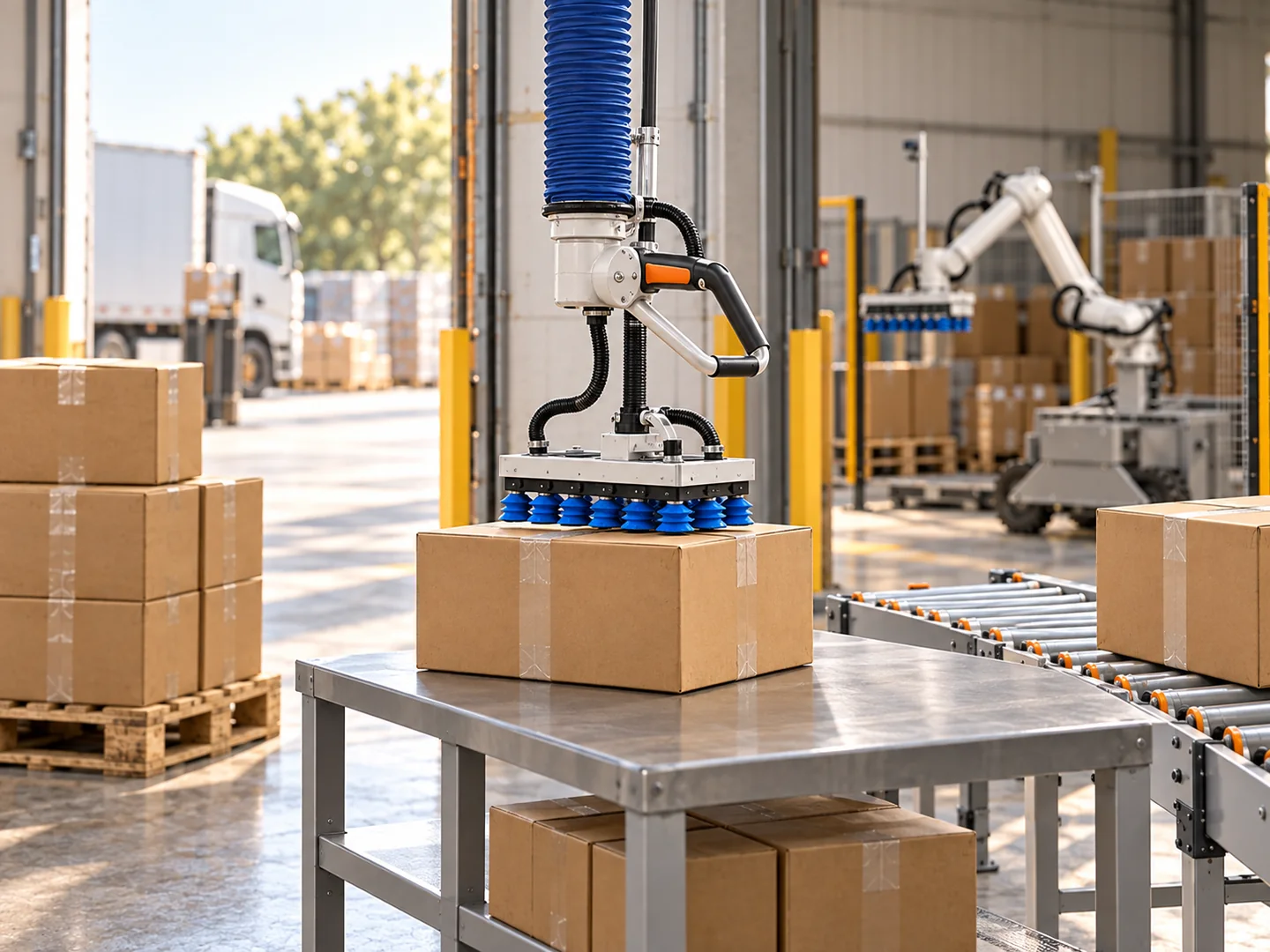
Understand vacuum box lifter cost by comparing tooling, mounting, installation, servicing and remaining labour. Use a worked example to assess payback.
Compare vacuum carton lifting solutions with KRONA U1: operator involvement, carton weights, throughput, conveyor or pallet handoff and operating costs.
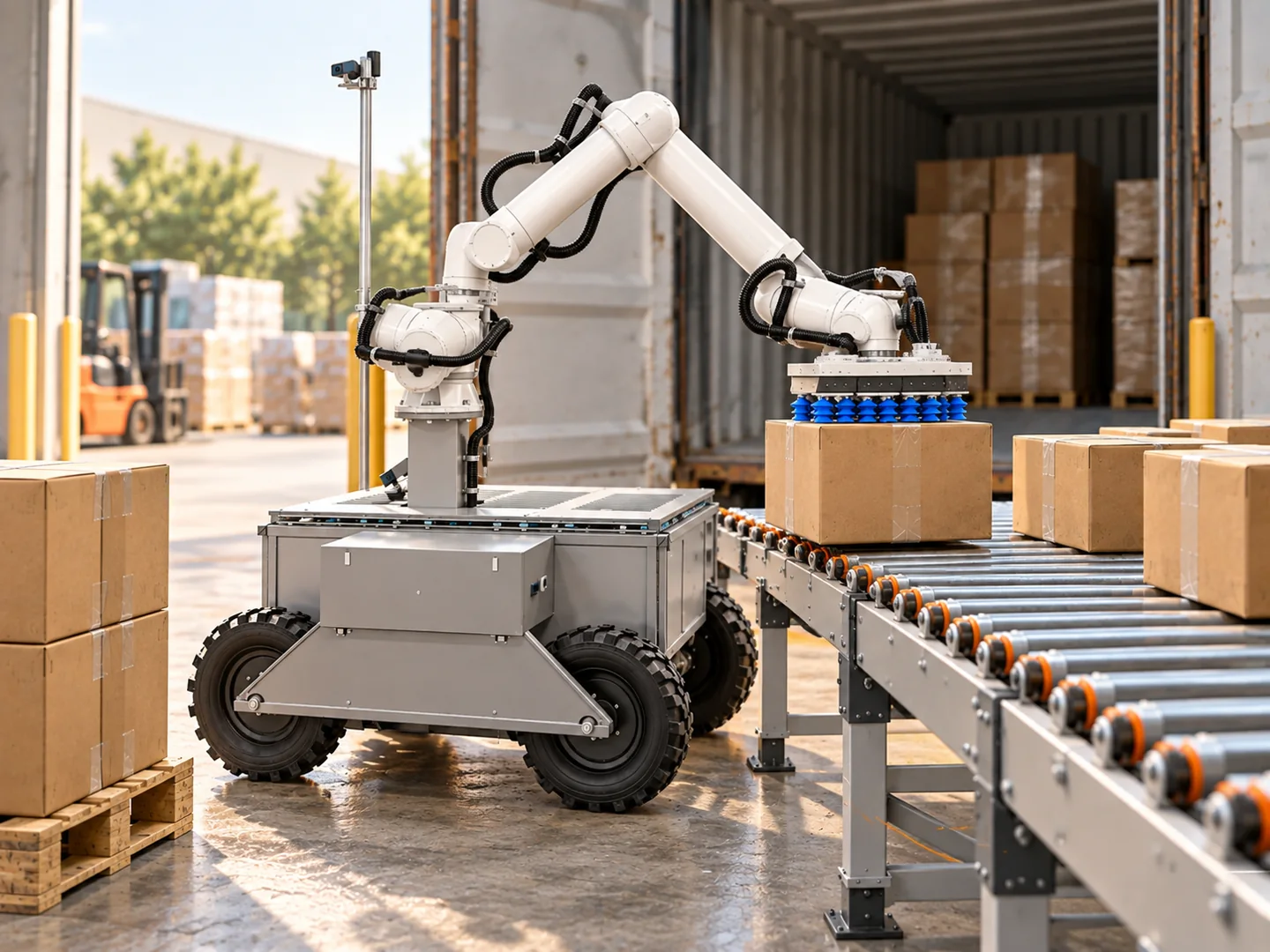
Assess a vacuum lifter for container unloading: carton access, reach, headroom, conveyor handoff, remaining labour and complete-load trial requirements.
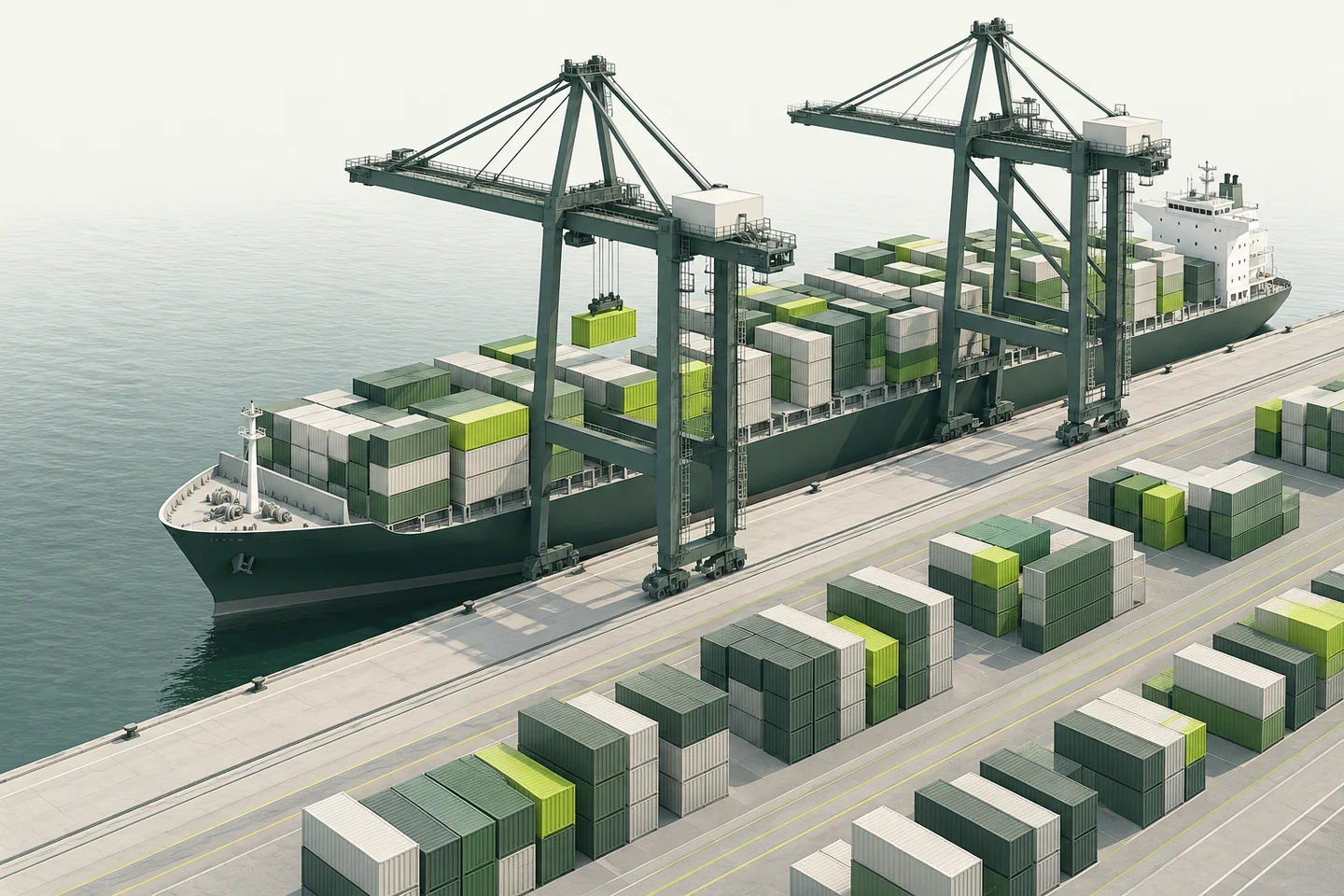
Understand container ship unloading time, crane moves and port release delays. Separate vessel discharge from warehouse unloading before planning dock capacity.
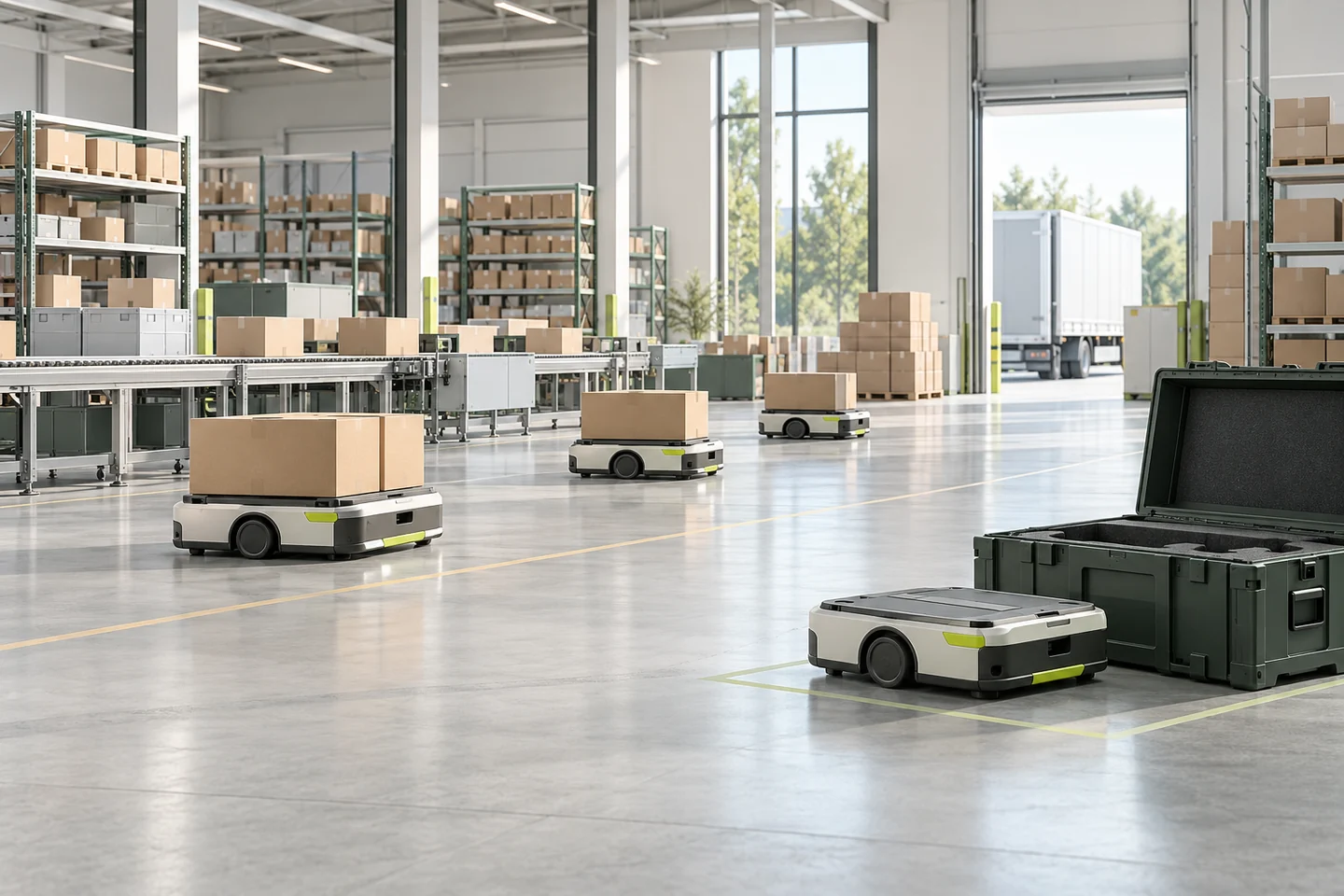
Plan warehouse robot rental for peak season. Compare leasing and RaaS, check deployment and return terms, and budget for temporary capacity before signing.
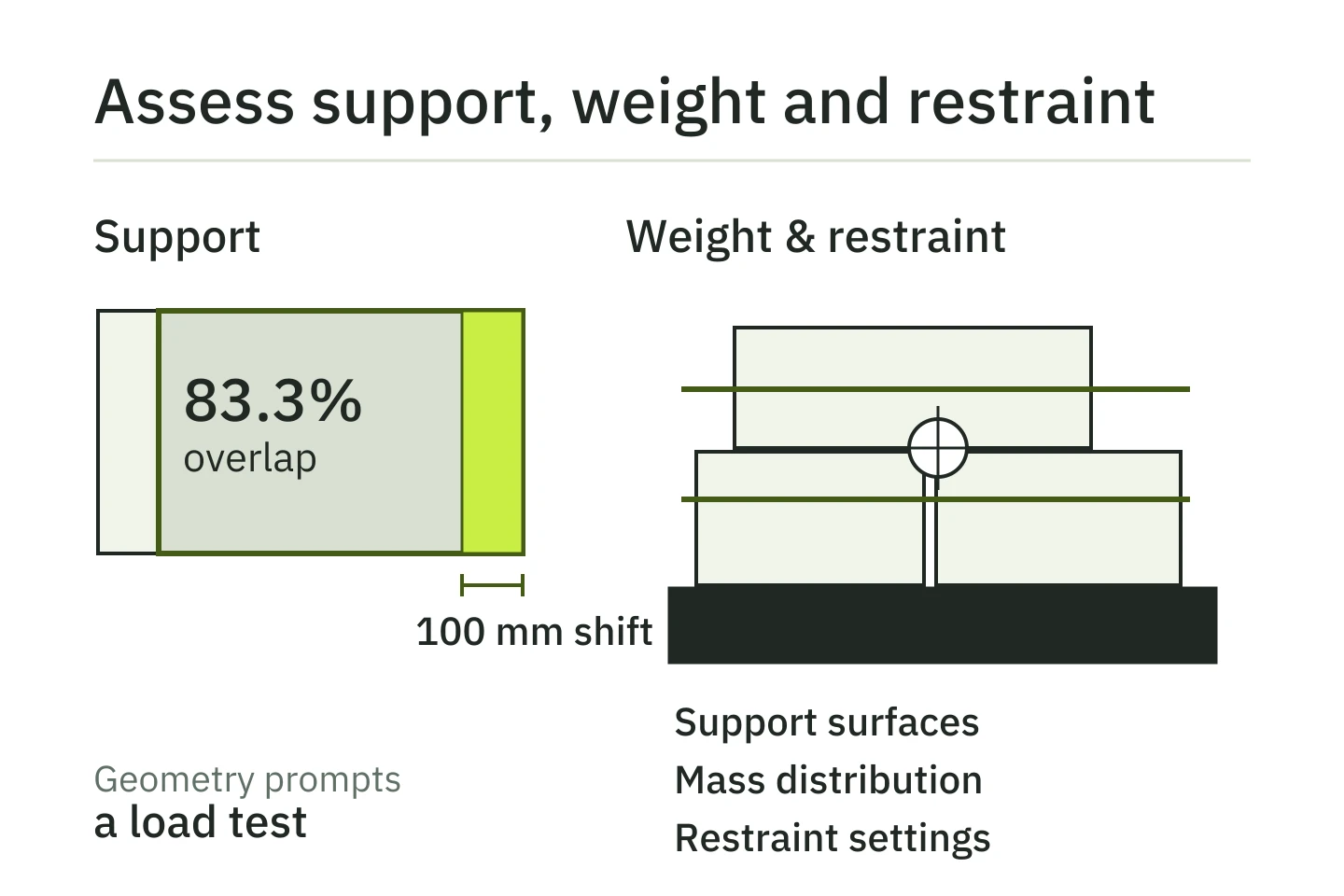
Assess mixed-case pallet stability through carton support, weight distribution, wrapping and handling tests. Includes a worked geometry example and worksheet.
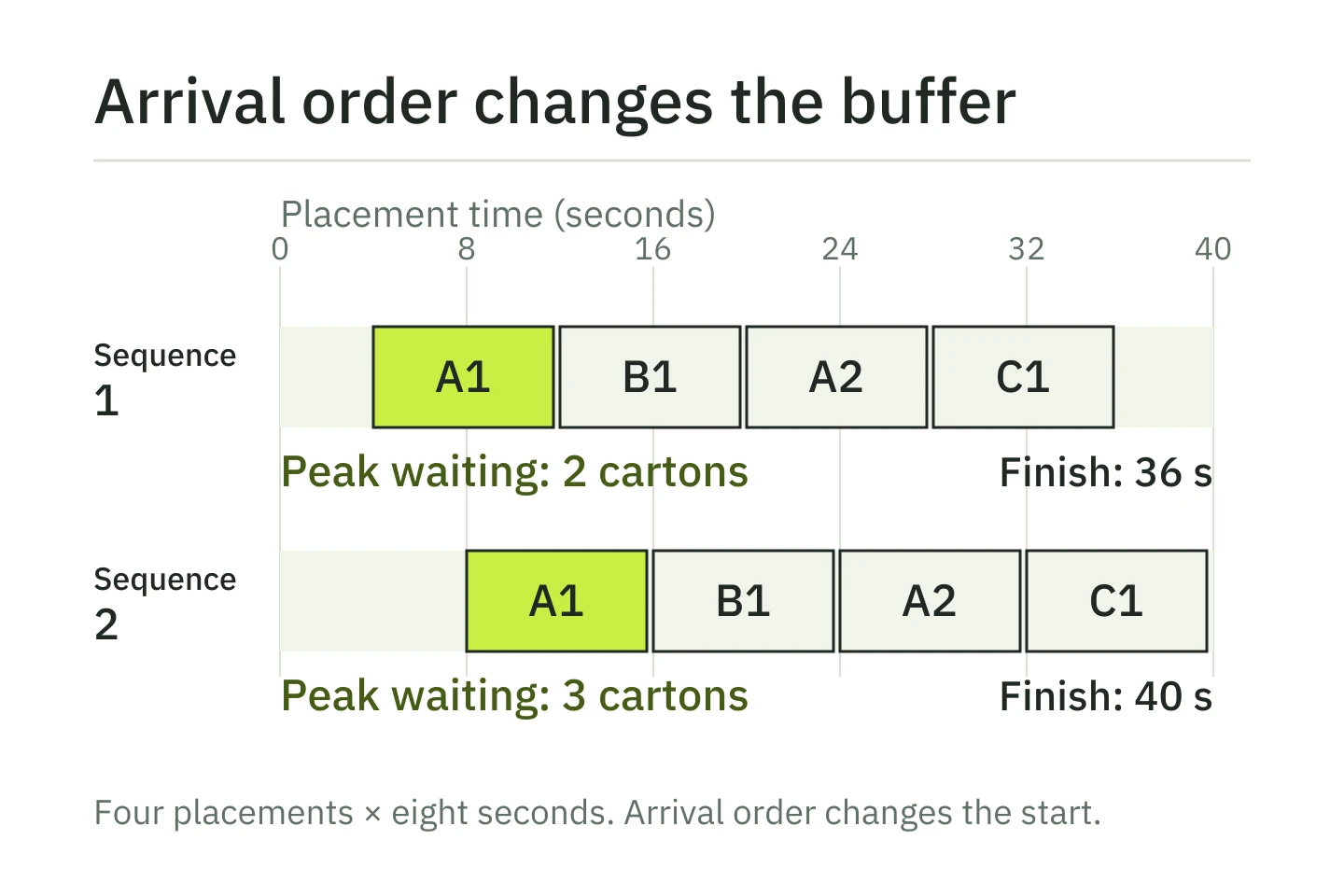
Size mixed-case palletizing buffers using arrival order, placement time and carton dimensions. Compare two timed traces and download a sequencing worksheet.
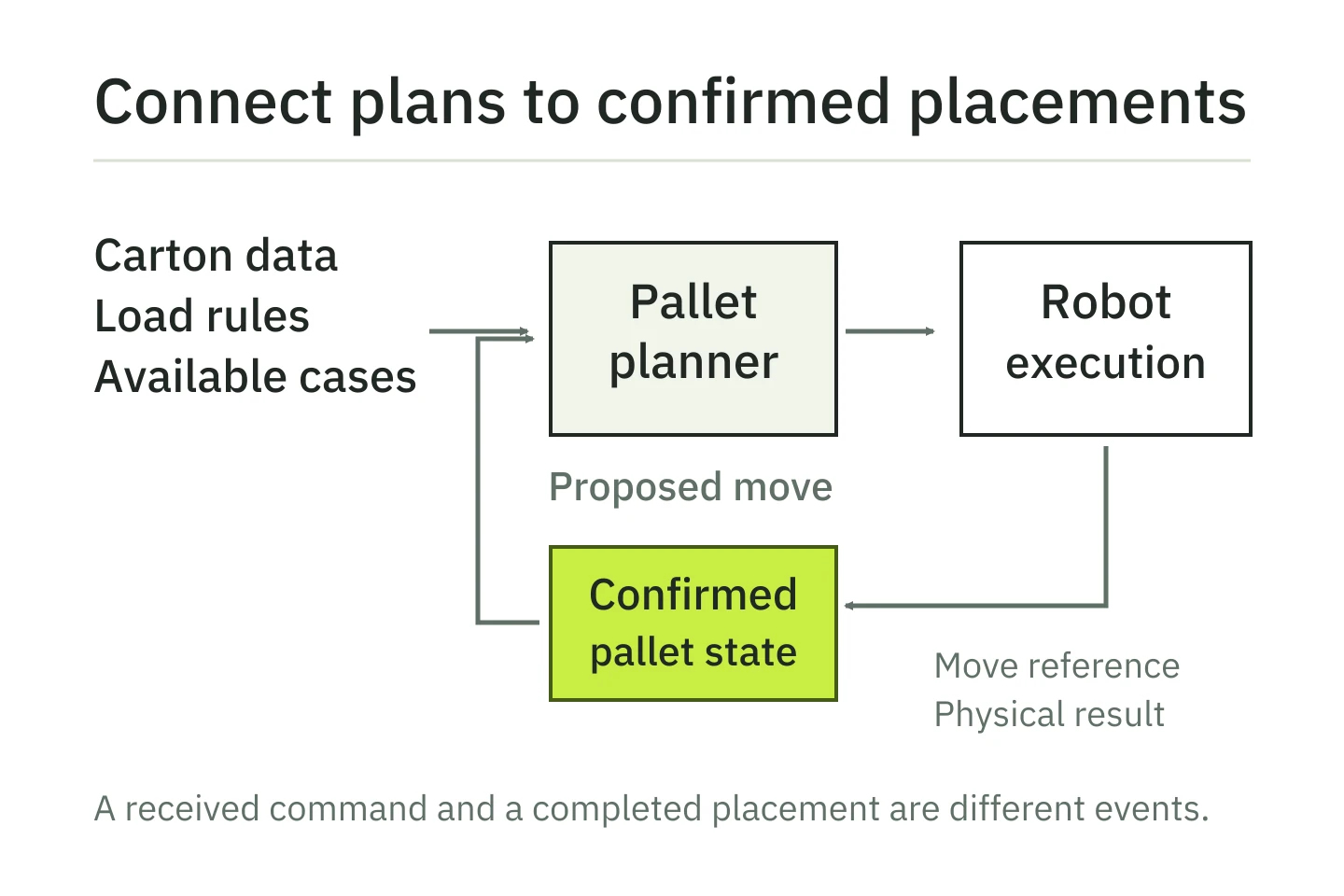
Specify mixed-case palletizing software with carton data, load rules, placement outputs and recovery tests. Includes a vendor-neutral requirements worksheet.
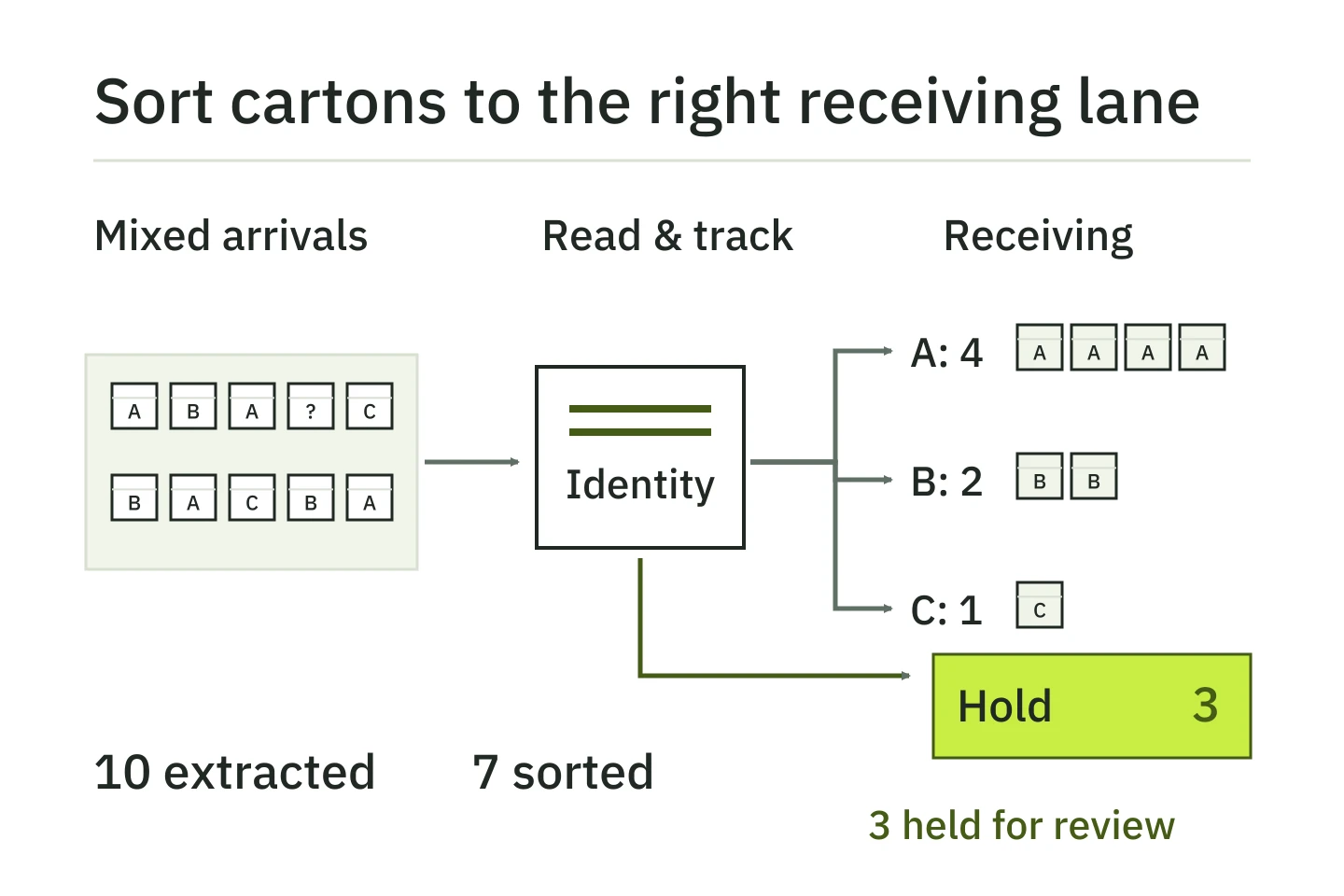
Plan mixed SKU container unloading and carton sorting with identity checks, destination rules and exception routes. Includes a worked example and worksheet.
Compare container unloading equipment for floor-loaded cartons: conveyors, lifting aids and robots. Match the equipment to freight, labour and receiving.
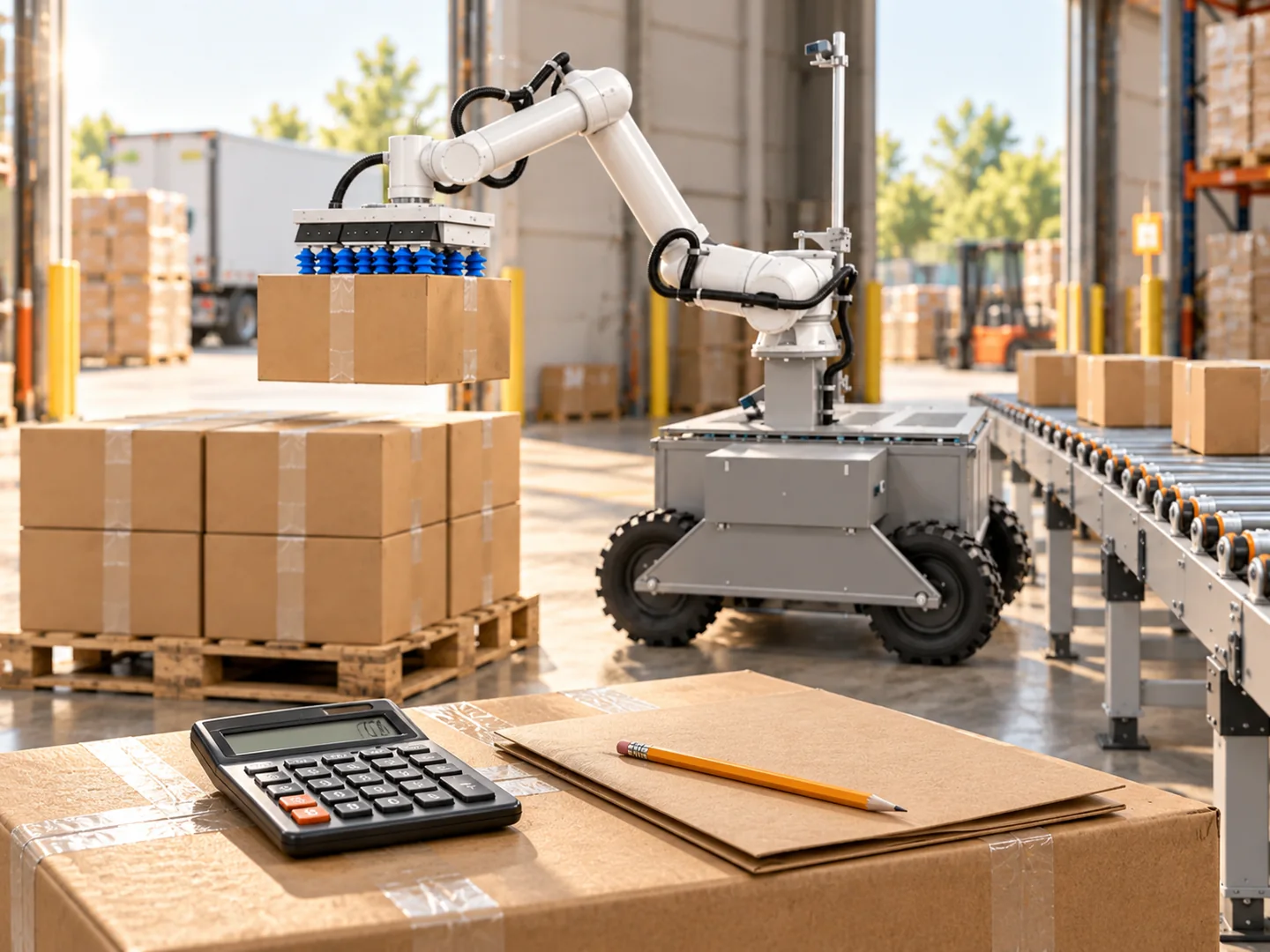
Build your container unloading robot RFQ with freight profiles, dock scope, performance boundaries and acceptance evidence. Compare offers on the same job.
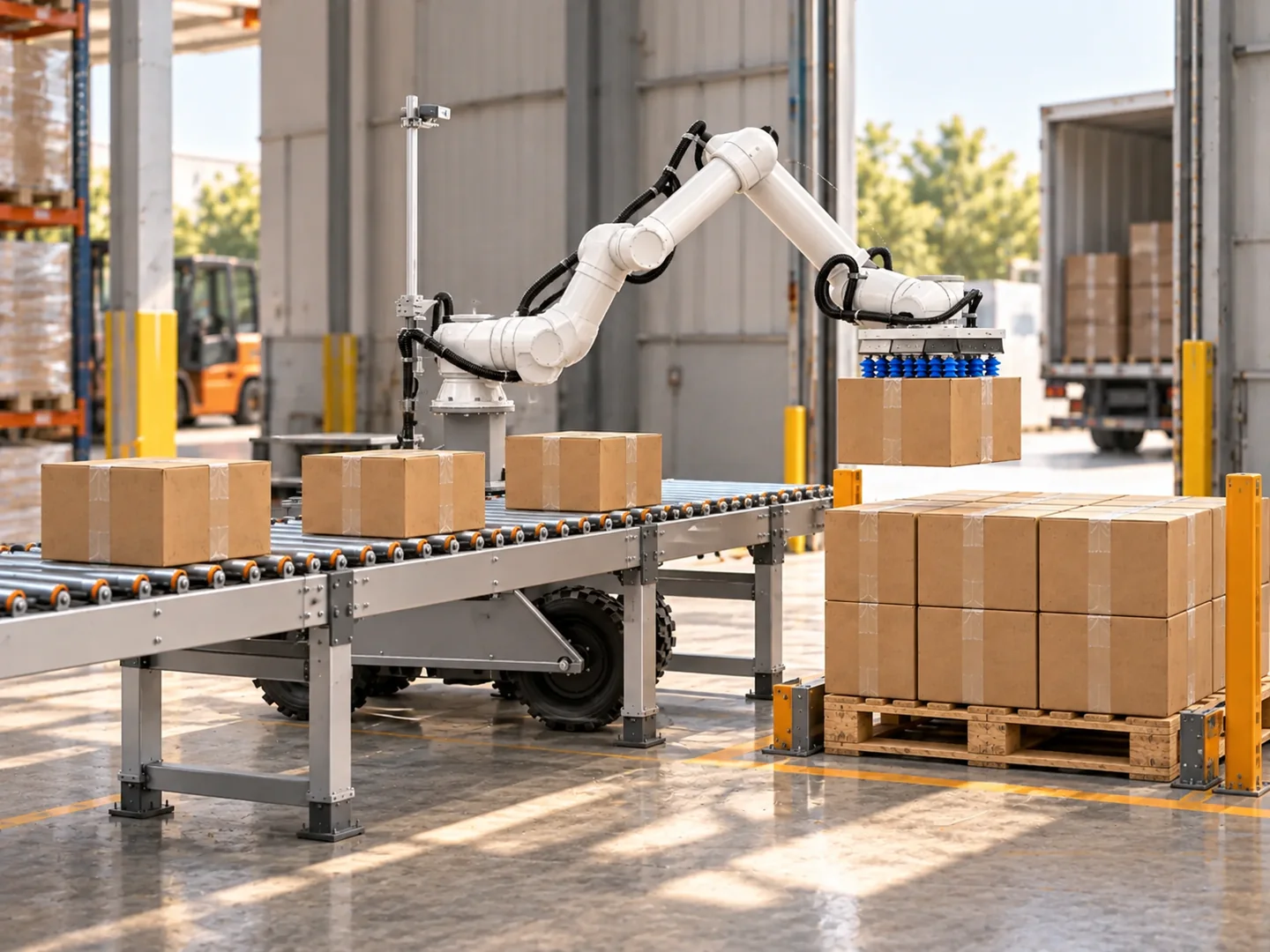
Estimate container unloading time from carton count, measured flow, preparation and exceptions. Compare extraction time with dock occupancy and labour-hours.
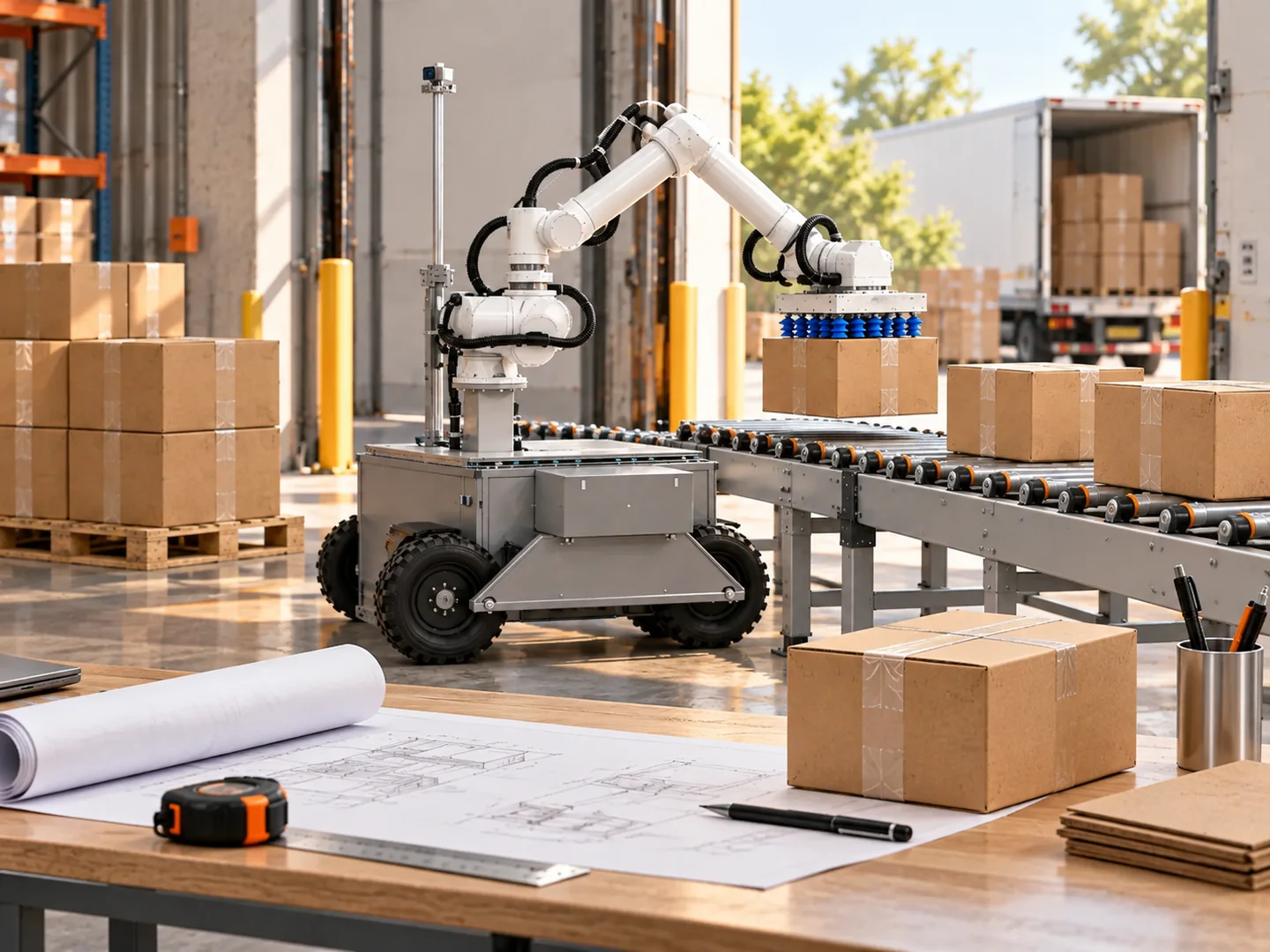
Survey loading dock requirements for robotic unloading: access, floor transitions, utilities, receiving space and ownership. Prepare a site assessment brief.
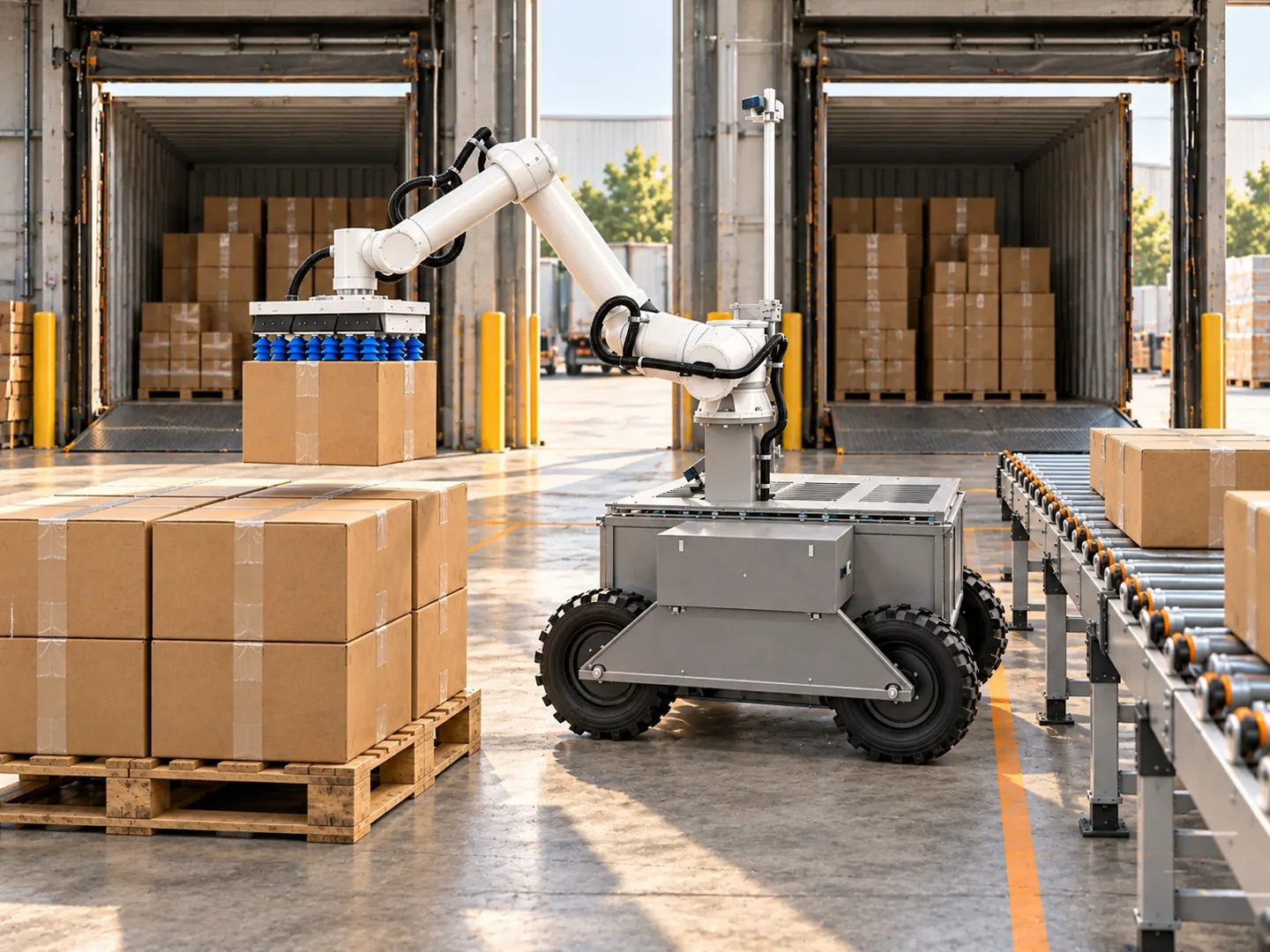
Plan warehouse unloading capacity for peak arrivals using load mix, dock windows and receiving limits. Test demand before sizing a container unloading robot.
Prepare a floor-loaded unload, track cartons and exceptions, and reconcile receiving. Includes a printable checklist and optional robotic-unloading checks.
Plan unloading-robot maintenance with clear responsibilities, approved parts, fault records and return-to-service checks. Includes a service-scope worksheet.
Manage carton-profile changes across 3PL clients with an eligibility register, reassessment rules and a shared-dock example. Includes a freight-change log.
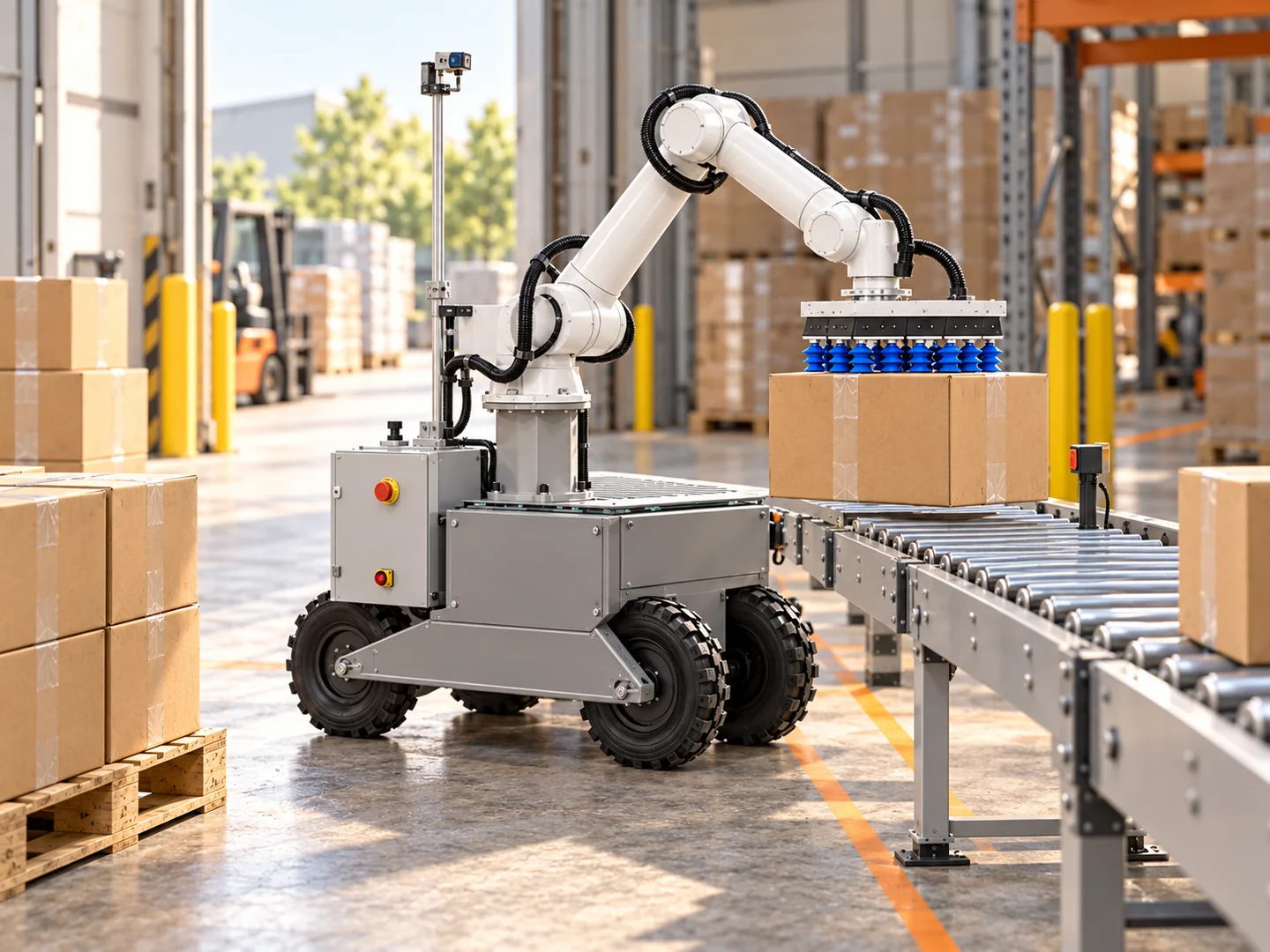
Plan robotic unloading and WMS receiving with carton identifiers, event ownership, duplicate handling and reconciliation. Includes an interface worksheet.

Compare palletizing robot cost by complete cell scope: tooling, conveyors, software, installation and support. Use a quote checklist for carton handling.
Assess robotics as a service for warehouse unloading: usage minimums, setup, support, freight fit and contract exit. Compare offers with a practical checklist.
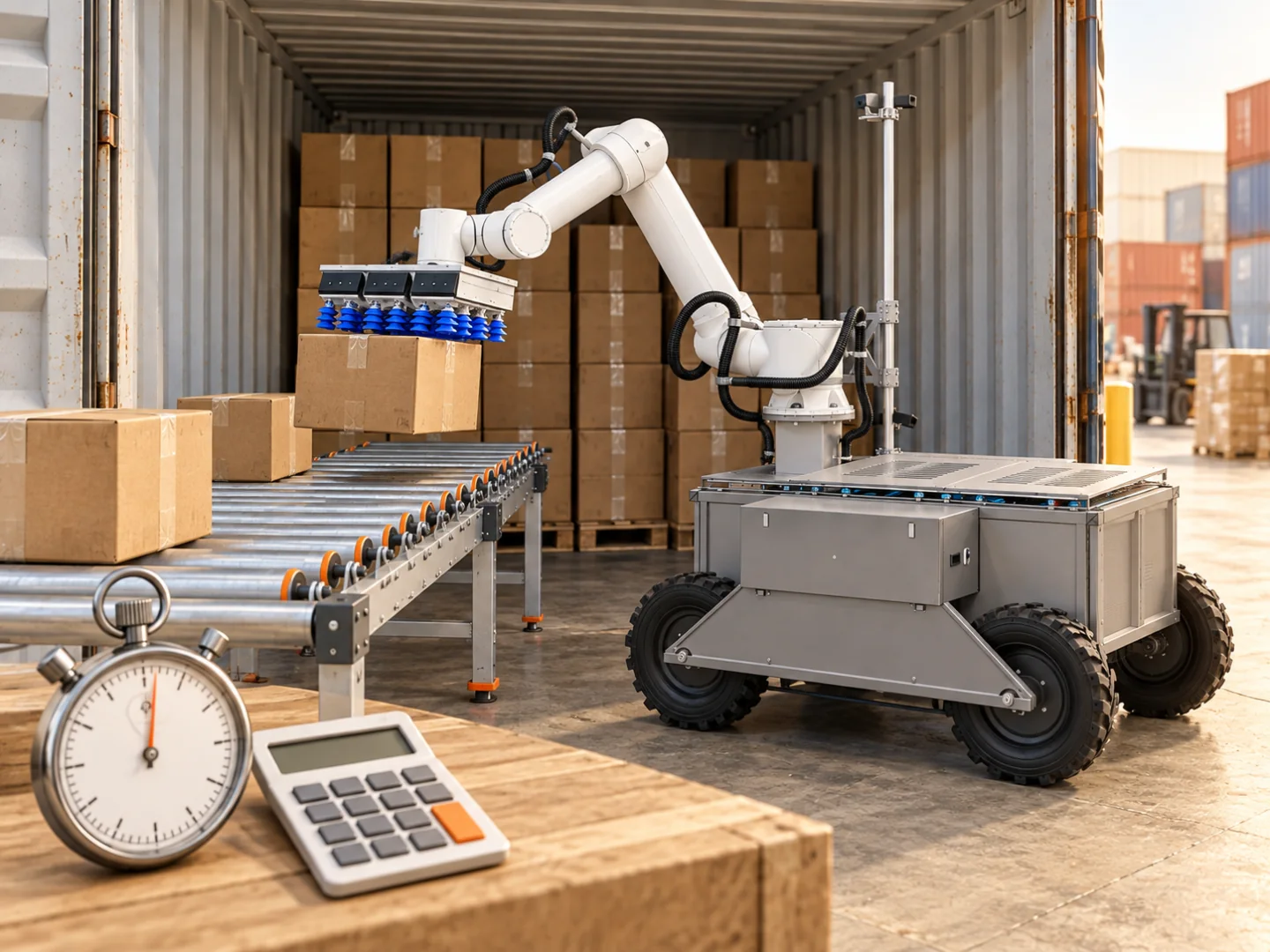
Build a warehouse automation ROI model from verified costs, cash savings and capacity. Calculate payback, test lower volumes and separate rental cash flows.
Assess 3PL unloading automation by client freight, dock control, contract duration and receiving capacity. Use a practical project qualification worksheet.
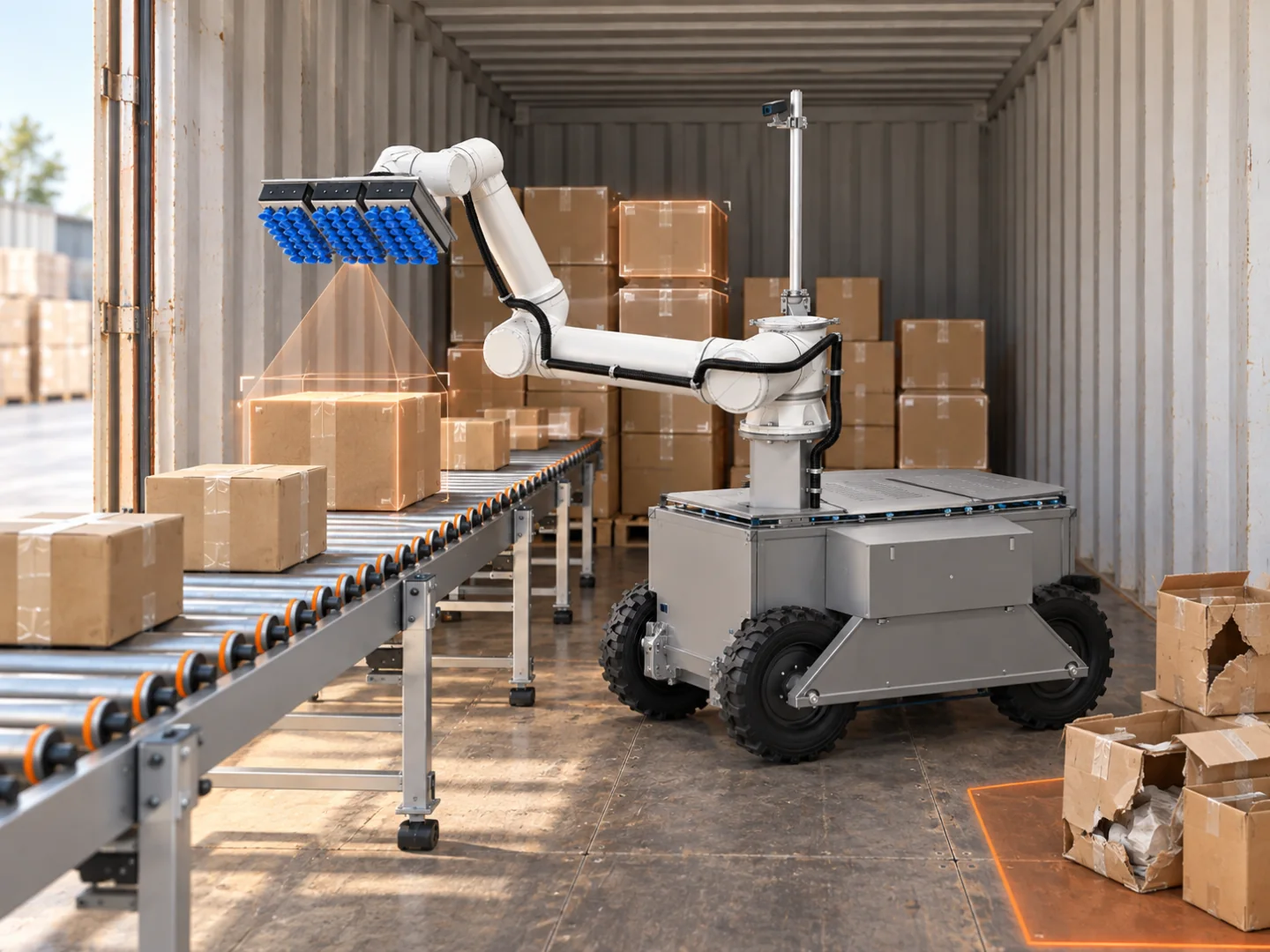
Compare container unloading robot designs, carton requirements, dock layouts and pilot measures. Build a shortlist around your freight and receiving workflow.

Compare cobot and industrial palletizing by carton-plus-tool load, reach, cell layout and sustained output. Build a client-specific selection worksheet.
Understand container devanning and destuffing, compare carton unloading methods and assess robotic freight fit, dock conditions and the receiving process.
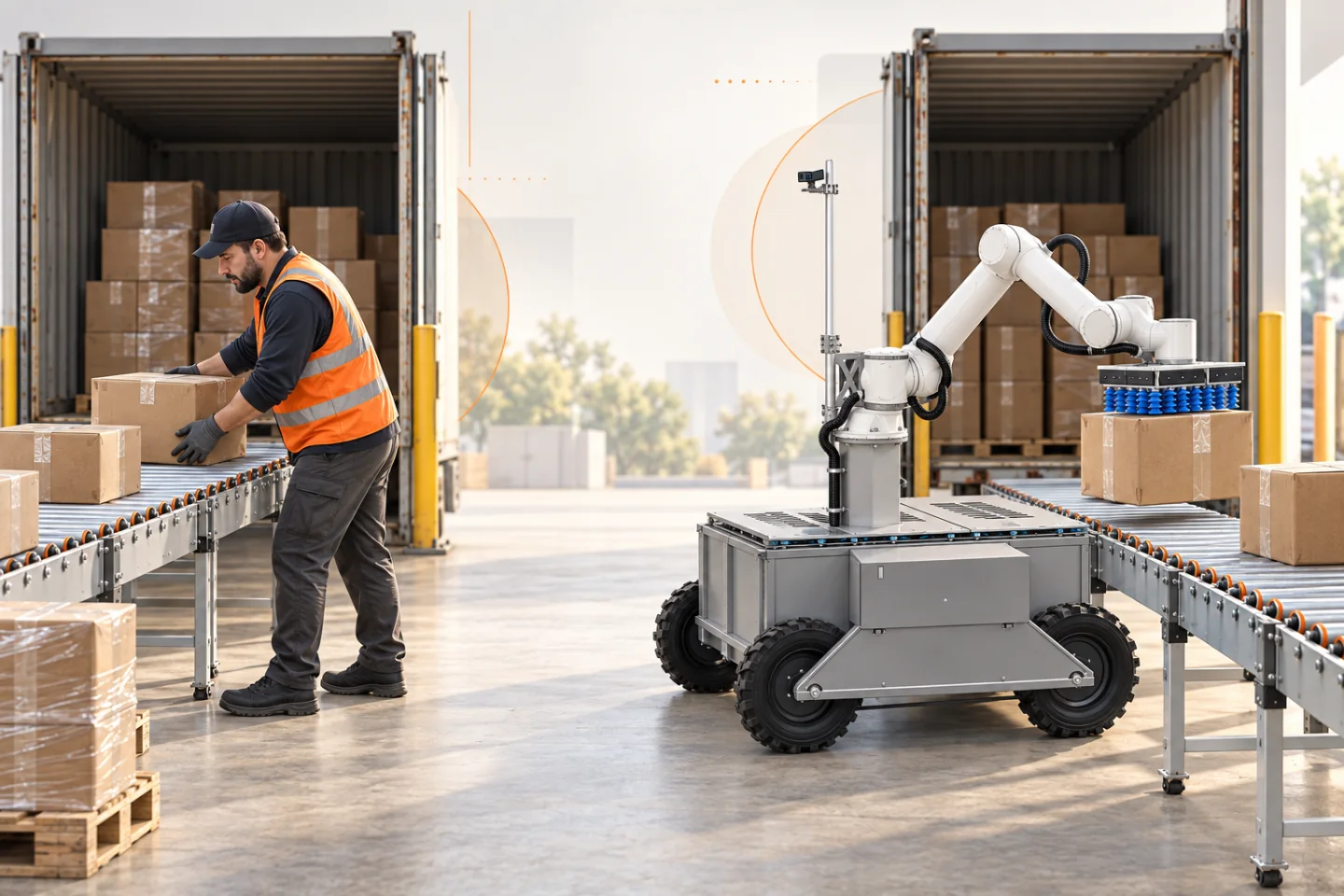
Compare Stretch, Pickle Robot, KRONA, Contoro, XYZ and Mujin by unloading workflow, handoff and freight assessment questions using manufacturer sources.
Plan carton extraction, conveyor flow and pallet handoff together. Compare receiving layouts, buffers and integration questions for robotic unloading.
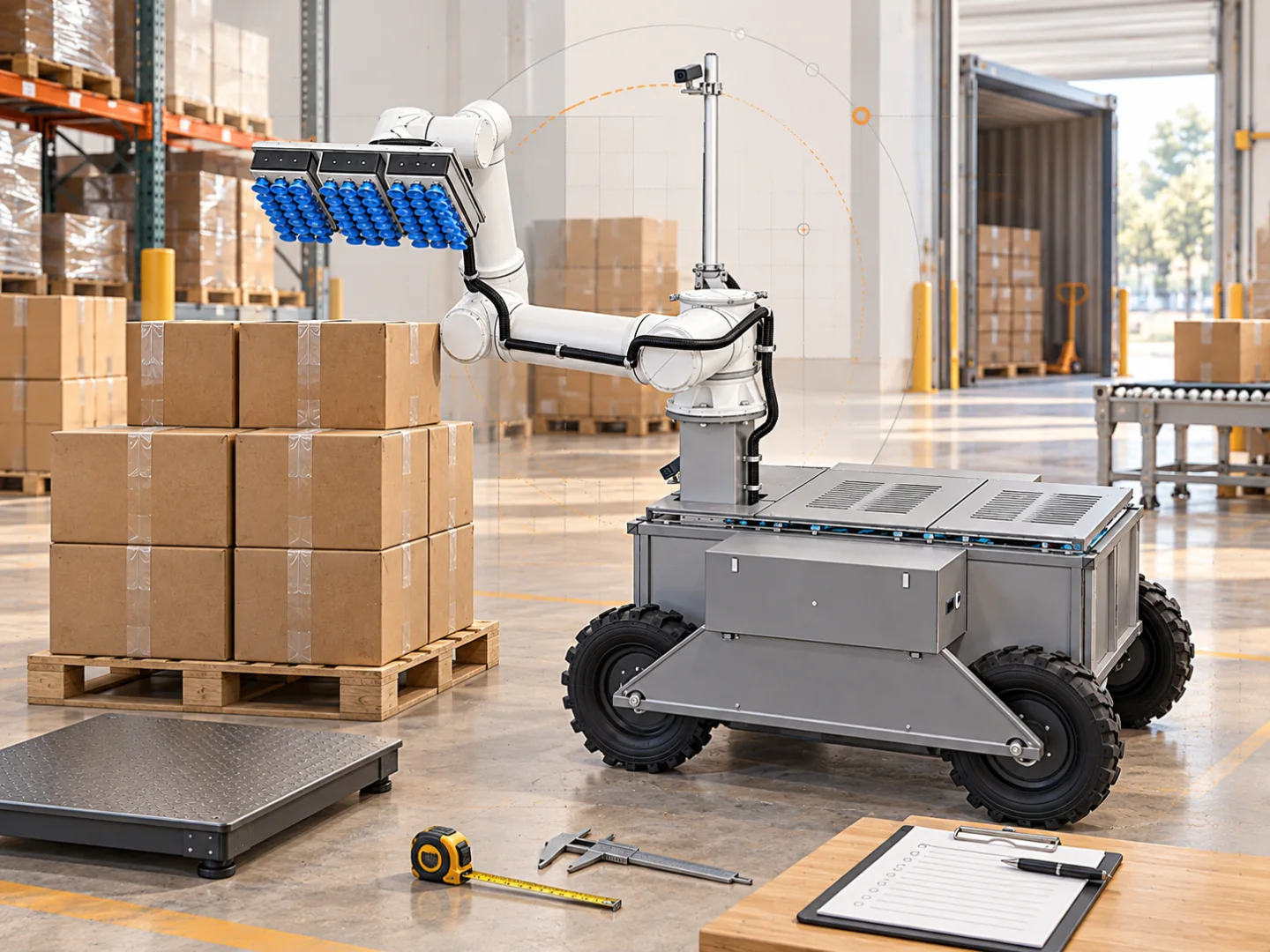
Specify carton-handling EOAT: contact surfaces, robot loads, mounting, utilities, grip confirmation, release and fault recovery across the receiving handoff.

Compare mixed-case and single-SKU palletizing by carton data, arrival order, buffering and load requirements. Define the receiving job before choosing robots.
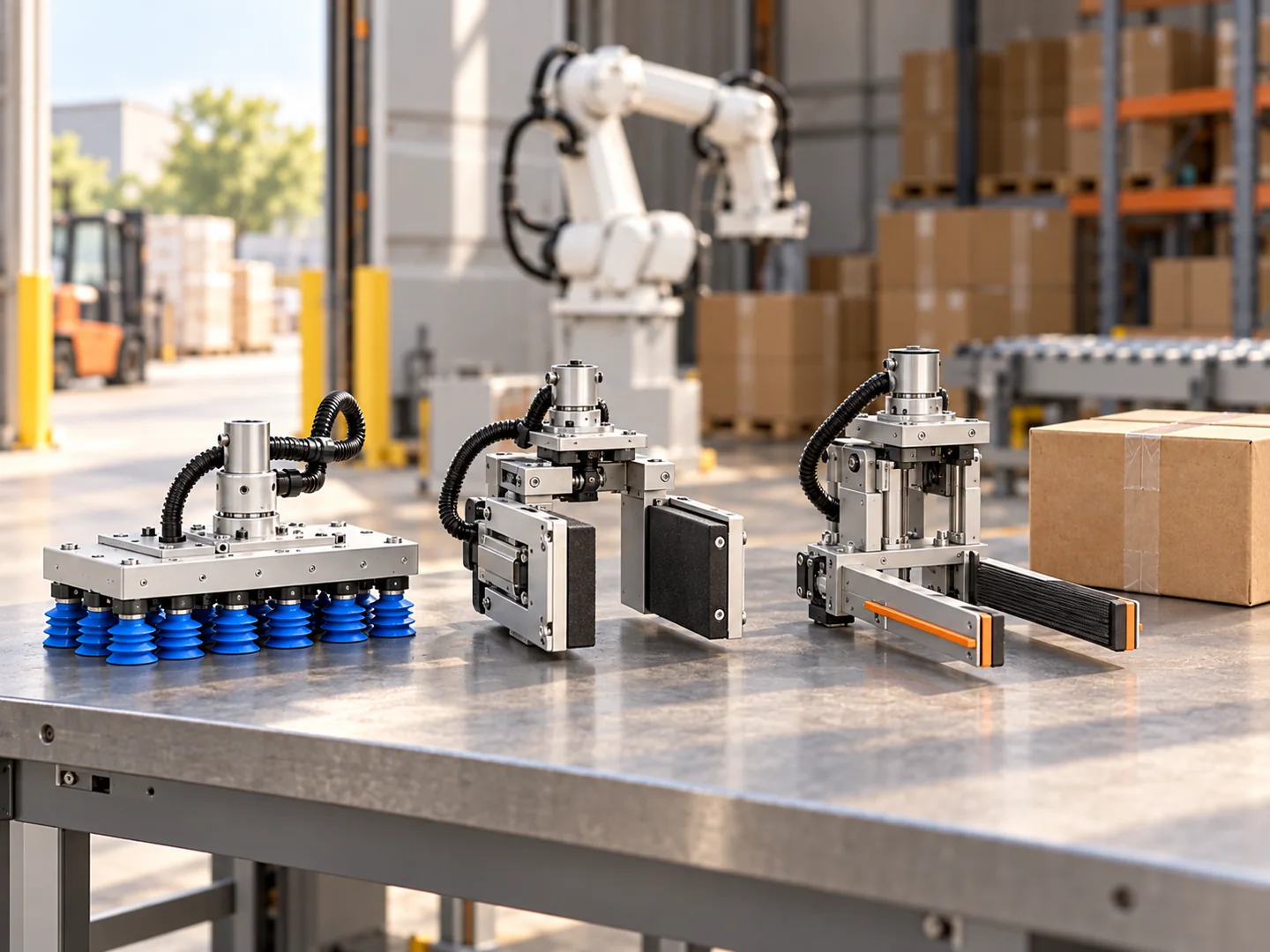
Compare vacuum, clamp and supported carton grippers for palletizing and unloading. Check tool mass, payload, box access, batch size and placement requirements.
Specify a robot-conveyor handoff with receiver readiness, transfer ownership, completion checks and fault recovery. Includes a generic sequence and state table.

Calculate carton-plus-tool mass and combined centre of gravity with a worked example. Then check the selected robot's load envelope, inertia and motion.
Specify a carton palletizing cell with a clear infeed, robot load, pallet positions and buffer plan. Includes an integrator's layout and project worksheet.
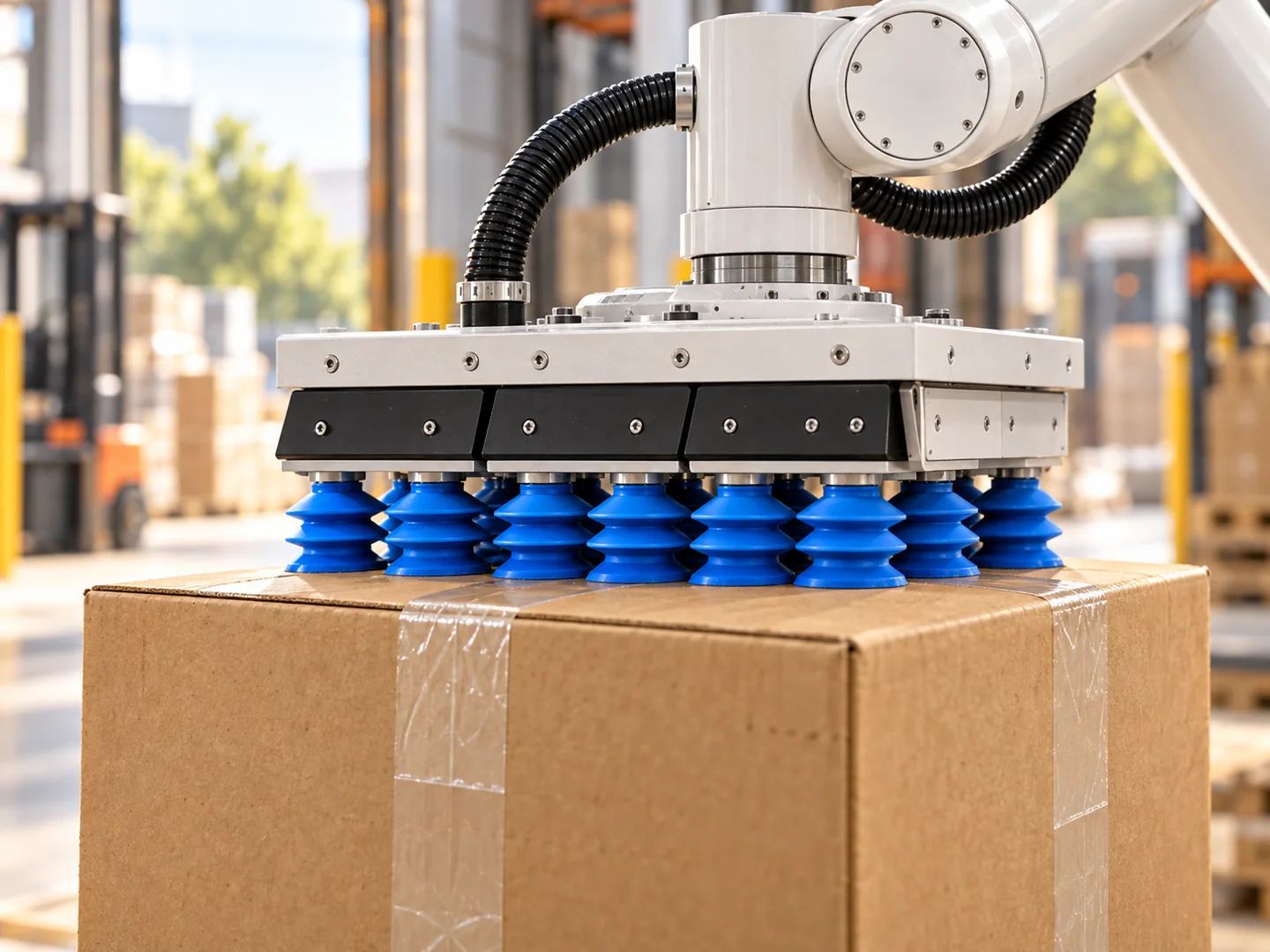
Work through a theoretical suction-force example, then account for load direction, leakage and carton strength when testing vacuum gripping on cardboard.
Estimate line capacity from robot cycle time, the slowest receiving stage and lost production time. Includes a hypothetical shift and buffer calculation.
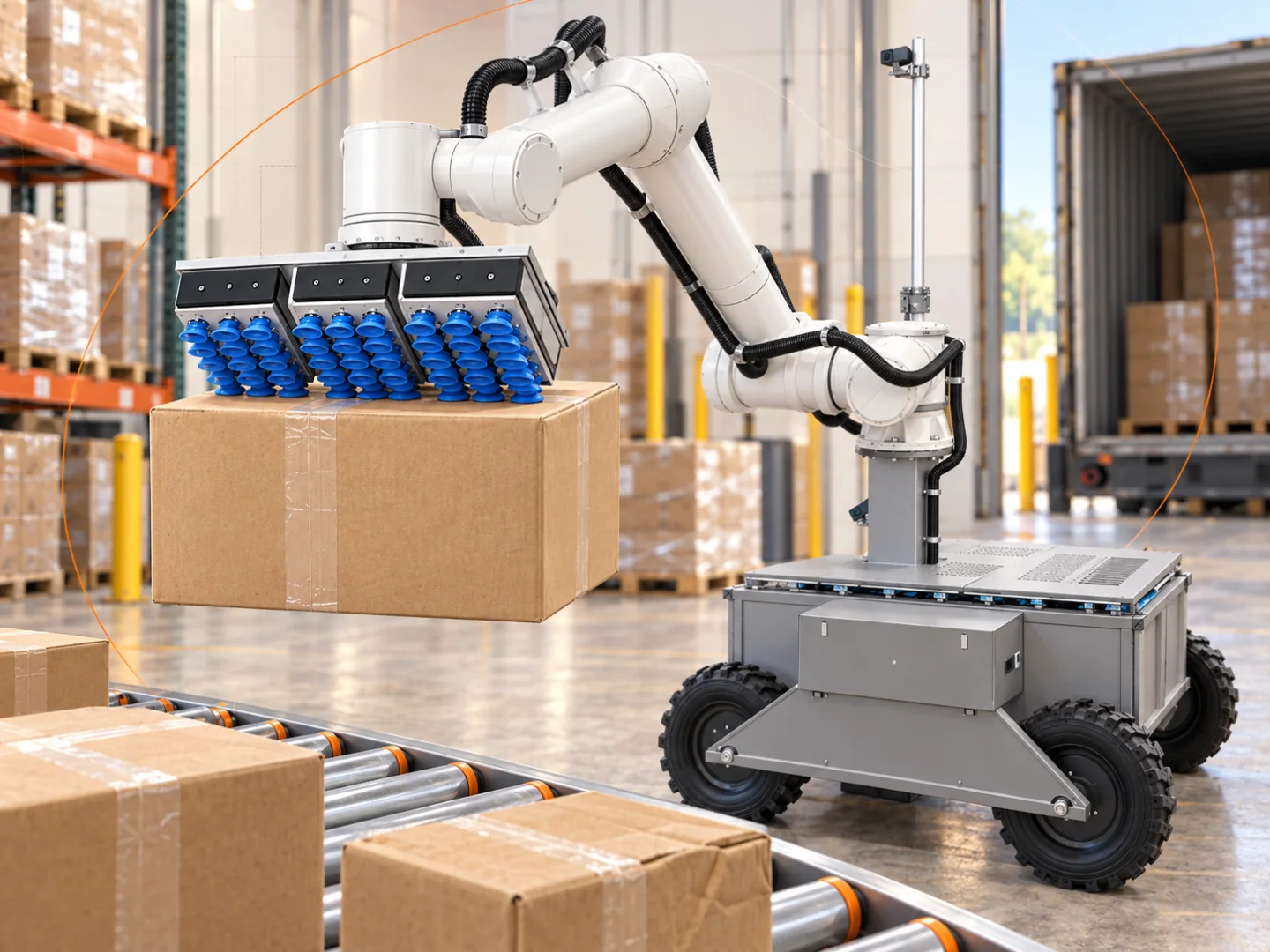
Diagnose failed carton picks with a symptom-to-test worksheet. Investigate vacuum leakage, board deformation, contact position, robot motion and release.
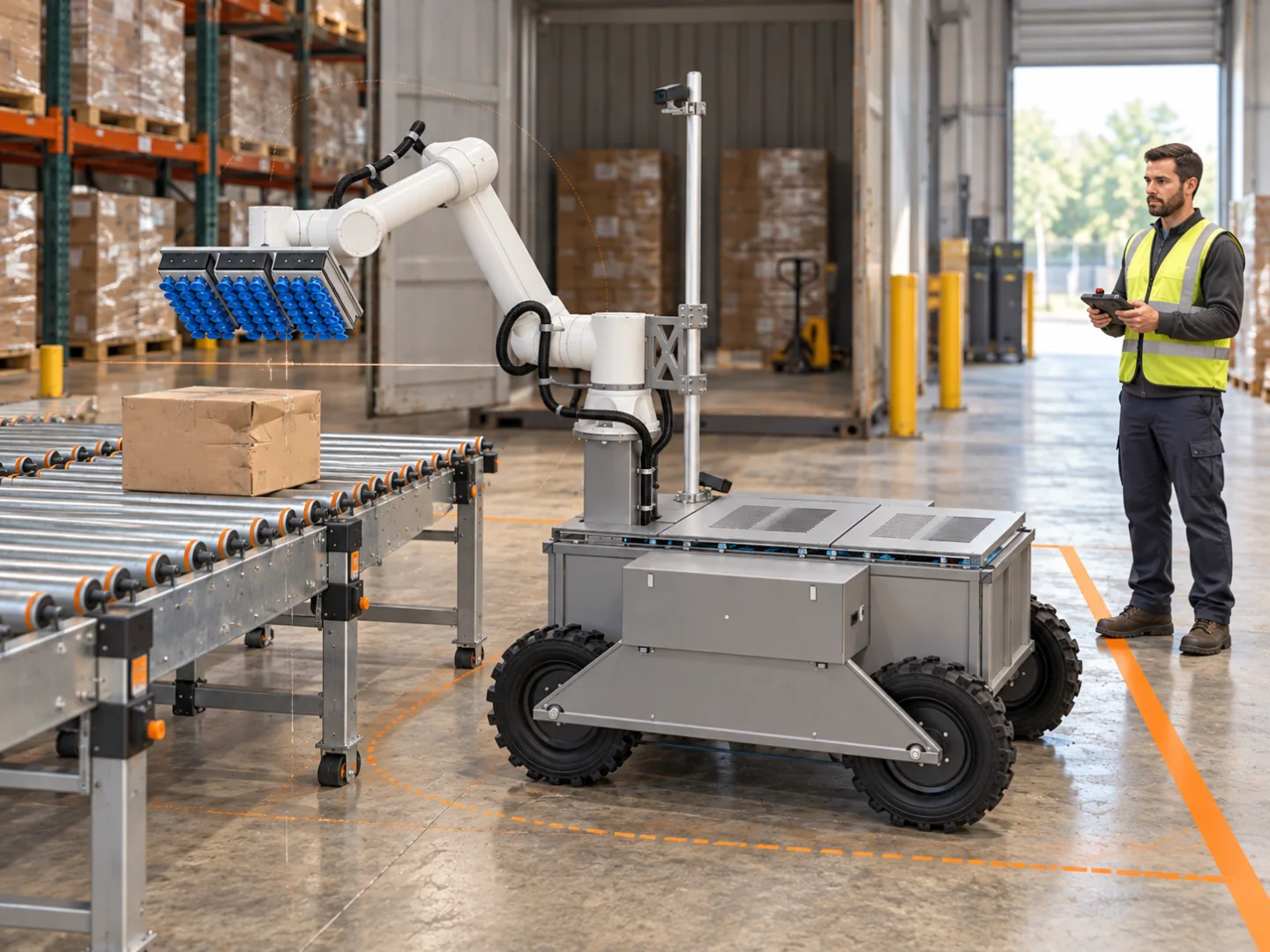
Plan operator involvement in robotic unloading: identify exceptions, define safe recovery steps and measure assistance frequency, minutes and dock downtime.
Compare carton gripper types and assess cardboard surface, weight, sealing and strength. Build a package test matrix for reliable robotic picking and unloading.
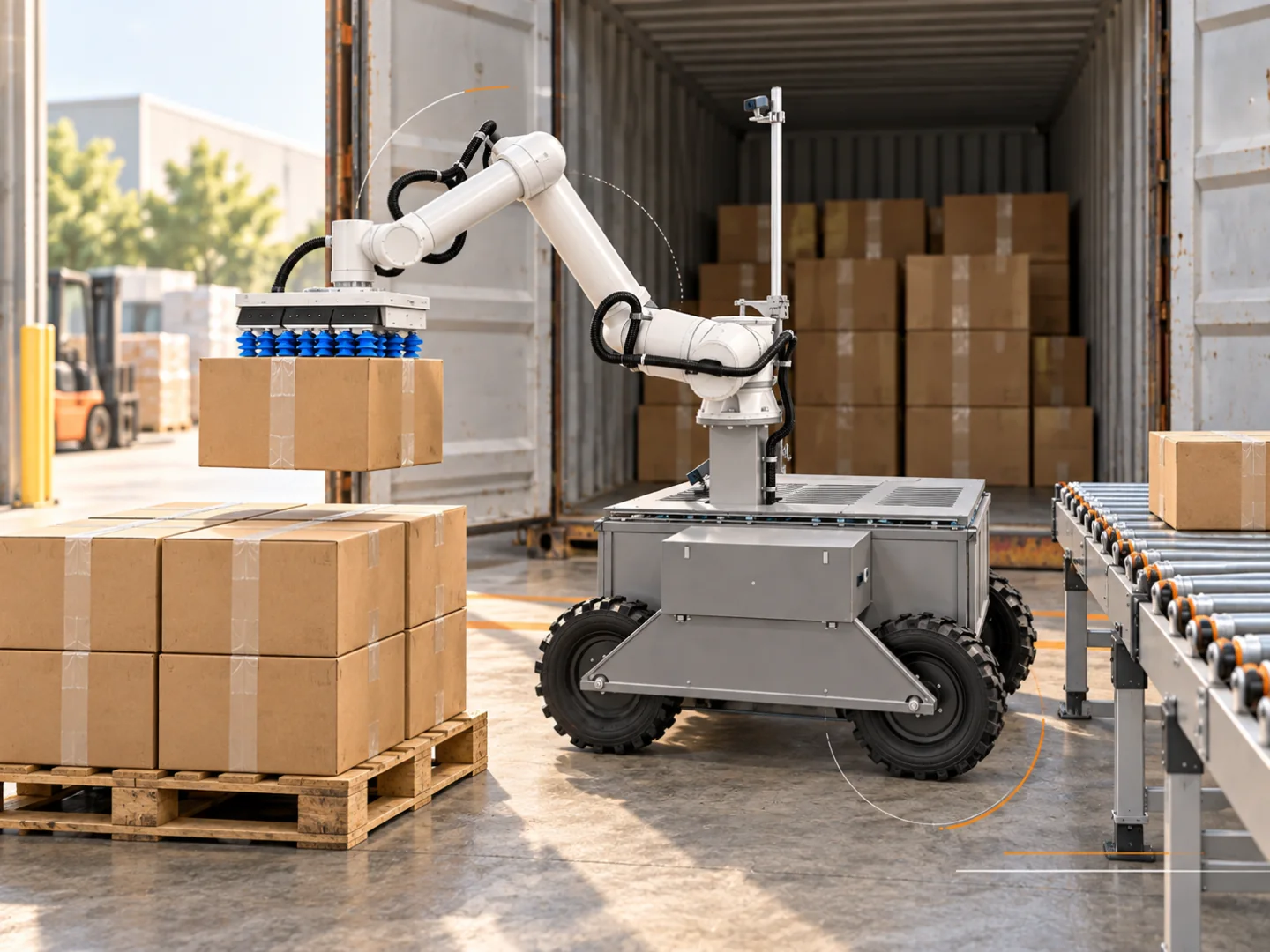
Compare floor-loaded and palletized cartons across loading, transport and receiving. Use the same delivered quantity, handling boundary and cost assumptions.
Prepare data for a robot unloading pilot: freight profiles, volumes, process time, labour costs, dock conditions and safety history. Build a baseline test pack.
Compare manual unloading, vacuum lifters, conveyors and robots by labour, complete unload time, exceptions and cost for the same representative freight.
Compare manual unloading costs with robot purchase and usage-based rental. Model labour, monthly minimums, setup, software and remaining receiving work.
Assess freight suitability for robotic unloading. Check carton weight, surface, packaging, loading pattern and dock conditions using representative box samples.