
Conveyor-assisted loading
Bring cartons closer to the working position using a configured conveyor route. Operators may still feed, identify and place them in the vehicle. Specify those tasks and the required access.
Explore conveyor loading layoutsConnect the carton sequence, conveyor route and loading operation. KRONA U1 loads containers with boxes supplied from pallets or conveyors. We assess the freight, vehicle and complete process together.
Request a loading assessment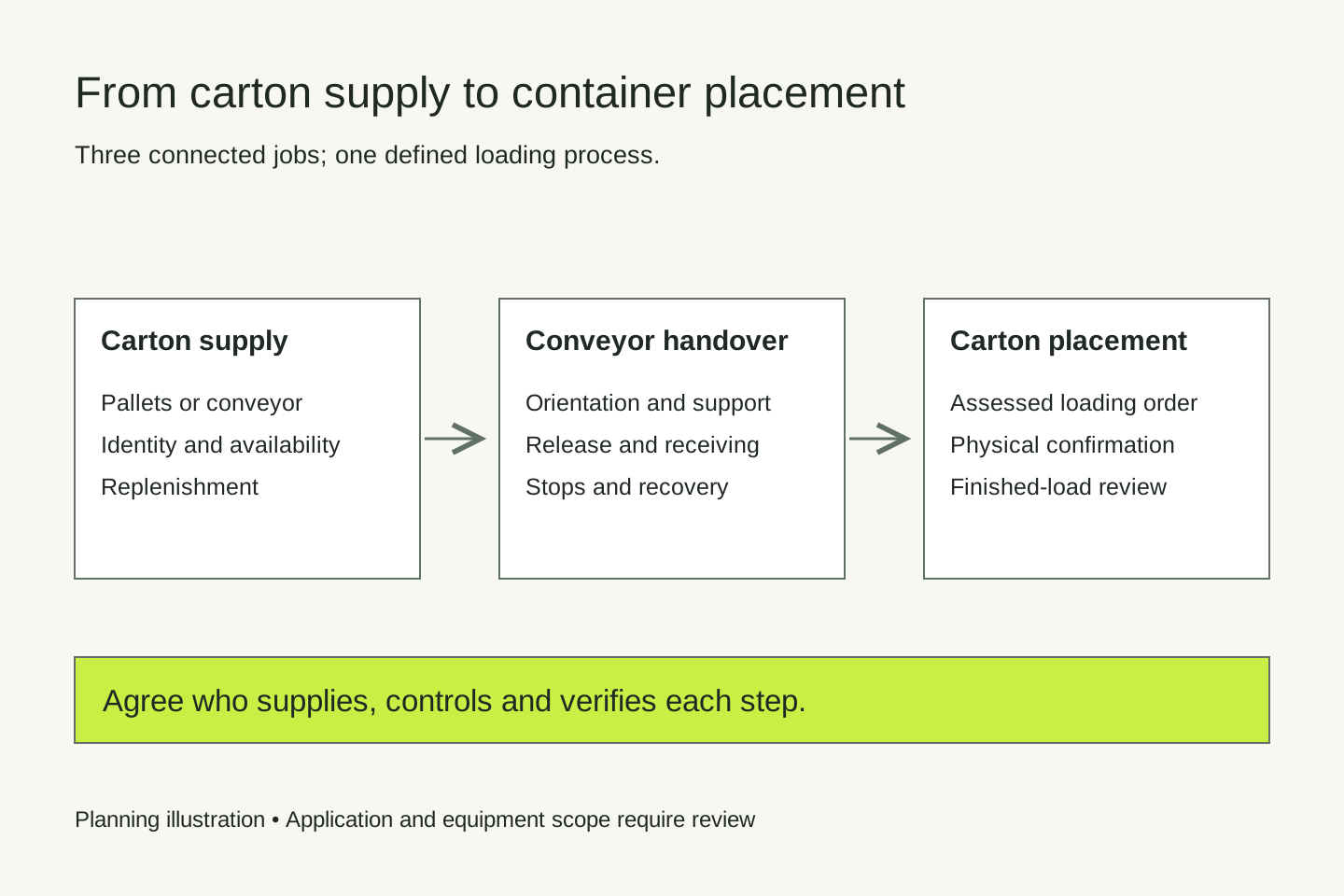
A conveyor moves cartons toward the loading position. A carton robot handles assessed picks and placements. A whole-unit loading system transfers prepared loads. Start with the freight and the work that remains for people.
Loading depends on having the right carton available at the right time. Review the source before choosing the transfer equipment.
Describe the pallet contents, carton access, replenishment method and how the next required carton becomes available. Define whether people or separately specified equipment prepare the supply. Loading from a pallet source does not establish that every pallet breakdown or mixed-case planning task is included.
Record carton orientation, spacing, identification, handover height and arrival order. The line must be able to stop or hold cartons when placement is unavailable. Agree the controls and who confirms a completed handover.
The inclined belt with supported roller extension and a telescopic belt boom are different arrangements. The first requires support along the roller extension; the second needs room for the retracted body and its operating envelope.
A plan can fit the vehicle geometrically while asking for cartons that are unavailable, placements the equipment cannot reach or a sequence the conveyor cannot supply. A mixed-SKU application also needs carton identity, required quantities and rules for what may support what.
Define who creates the loading plan, who releases each carton and who records the confirmed placement. Keep the vehicle and carton data tied to the plan version. A missing carton or interrupted move needs an agreed recovery decision before the next placement begins.
Use the loading optimization requirements guide to separate geometric planning from equipment execution. The mixed-SKU worked example shows how supply, placement and confirmation connect.
KRONA's published maximum carton weight is 25 kg for eligible closed cardboard boxes. Carton condition, accessible gripping surfaces, placement requirements and vehicle access still need application review. Mixed-SKU planning, third-party software and control interfaces are defined within the agreed integration scope.
Provide measured internal geometry and the door opening, floor and threshold conditions, available working space, carton dimensions and mass, and the required loading pattern. For truck routes, include the approved load-distribution constraints and any multi-stop unloading order.
Agree representative loading tests rather than applying an unloading rate to the outbound job. Measure carton supply, complete loading time, stops, remaining human work, package condition and finished-load review. The unloading time and savings figures elsewhere on this site describe unloading applications.
Open the editable loading project brief. Fill it in locally and print or save the record; the worksheet sends no data to KRONA.
The proposal should identify carton supply, conveyor equipment, robotic handling, controls, software responsibilities, safeguarding, installation and commissioning. Name the exclusions and the tests required before accepting the application.
KRONA offers usage-based robot rental with a tailored hourly rate and a one-time installation fee. Conveyors can be supplied within the agreed project scope. Review the quote scope or discuss an integrator project.
Specify carton rules, vehicle limits and executable placements before comparing loading software.
Connect a carton list to supply order, confirmed placements and exceptions.
Understand which cartons can move next and how much temporary holding the process needs.
Use the same completed job when comparing manual, conveyor-assisted and robotic loading.
Give suppliers one set of carton, vehicle and integration requirements.
Measure the complete operation, assistance and finished-load checks.
Share roughly how much you need to move. We’ll get in touch to discuss the possibilities.
info@kronarobot.com