
Known-carton pallet building
A declared carton format and arrival sequence can support a repeatable pattern. Include pattern changes, partial pallets and the moment the finished load is released.
Define one carton set and pattern.
Assess a KRONA carton-palletizing application around your filled boxes, infeed and required pallet output. Connect the pick, placement and pallet exchange before comparing a complete cell or an integrated receiving flow.
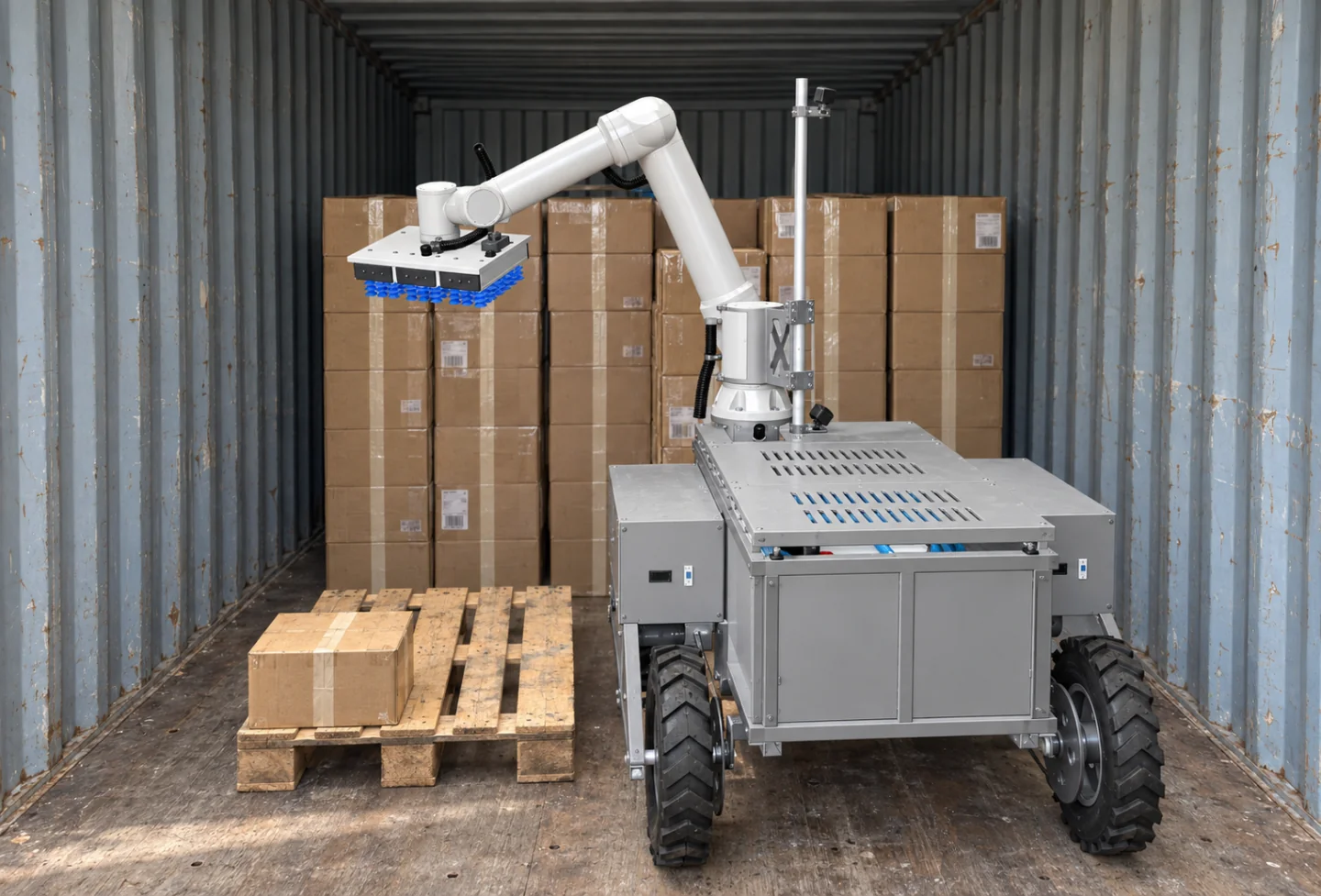
Box palletizing and case palletizing describe placing packaged products onto a pallet. The required result determines the infeed, handling and planning work around the robot.
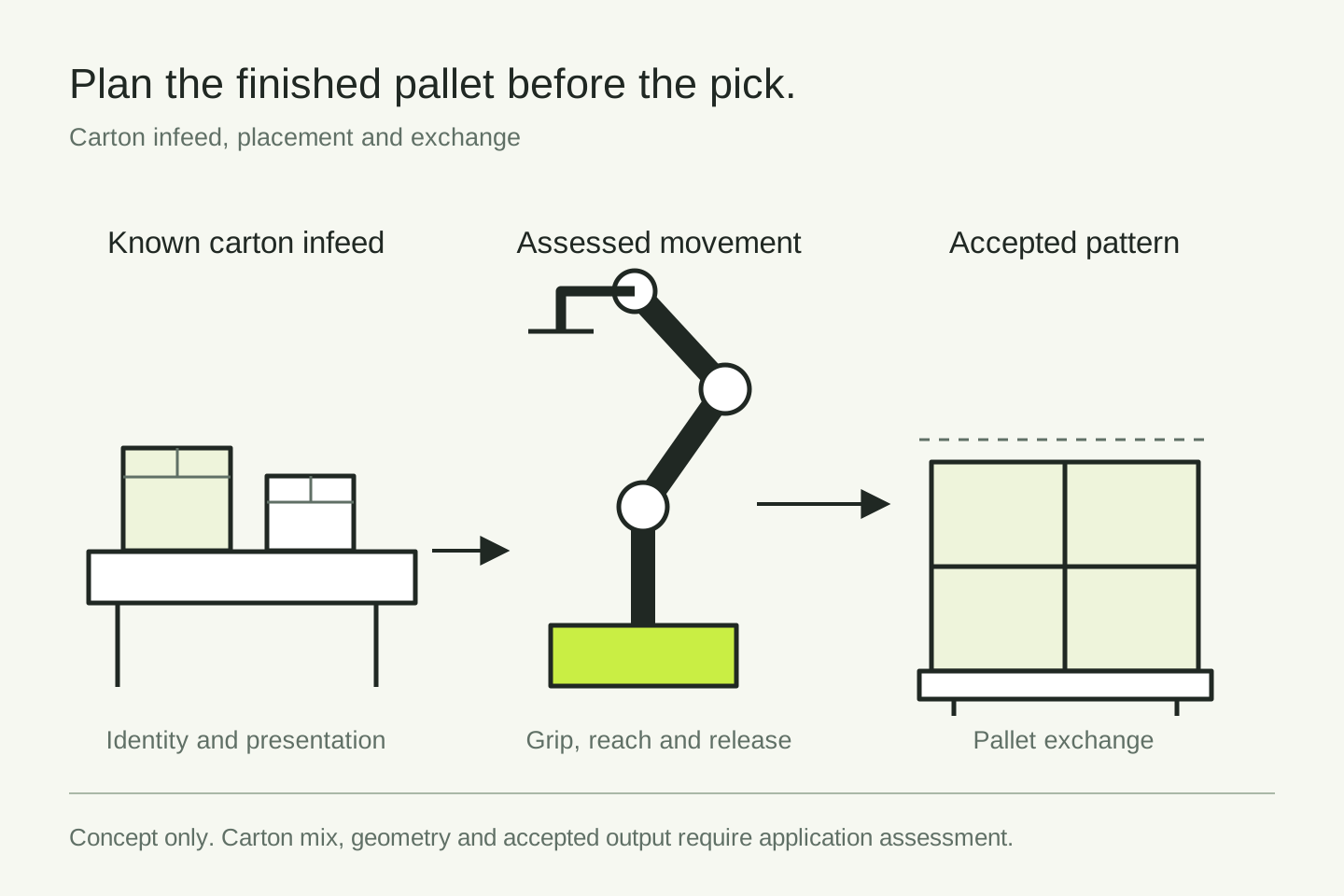
Record the filled carton dimensions and weight, packaging condition, available gripping faces and permitted orientations. Use the actual transported box, including bulging panels or changed contents, rather than only an empty sample.
Describe how the next box becomes available. A single conveyor with a known sequence differs from several packing lines or a changing stream of inbound cartons. Include identification, pick position, spacing, arrival order and the way an unsuitable box leaves the normal flow.
Define the pallet dimensions, placement pattern, finished height and any load or label requirements. Distinguish a pallet used to collect received cartons from an accepted load ready for storage or onward shipment.
Tooling needs to work at both ends of the movement. A gripper that picks a box from a clear conveyor may need different clearance to release it beside another carton or withdraw from a pallet corner. Include the carton, loaded tool and motion together in the assessment.
Check the lowest and highest required positions, the far corners of the pallet and the route between the infeed and each placement. A compact robot footprint does not describe the complete operating space or establish that every full-pallet position is reachable.
KRONA U1's published carton-handling limit is up to 25 kg for eligible closed cardboard boxes. Its existing unloading-to-pallet operation is a starting point for the application discussion. Standalone palletizing patterns, working geometry and sustained output are agreed through representative testing rather than inferred from an unloading specification.
Plan how an empty pallet becomes ready and how the finished pallet leaves. Include the space needed by operators or a pallet-handling vehicle, the occupied receiving position and the point at which the next build may start.
One pallet position, two receiving positions or a separate exchange arrangement can produce different working sequences. A buffer may cover a short exchange, but continuous production still needs enough sustained receiving capacity.
If the robot is shared between stations, describe the move, realignment, setup and restart process. Remotely positioning a mobile platform is a different operating arrangement from an autonomous station change. Compare total cell space and changeover time, not only the size of the robot.
Mixed-case palletizing adds decisions about carton identity, dimensions, load support, arrival sequence and the destination of the finished load. A system may need buffering or a different release order before the robot can place the next carton.
State who creates the pattern, which load rules apply and how the system records the actual pallet state. An interrupted placement, missing carton or damaged box needs an agreed recovery decision before the build continues.
The initial KRONA assessment should identify the supported carton set and accepted pattern. Add broader mixes and planning functions through a defined application scope, with a demonstration of the required finished pallet.
Compare the complete carton-handling scope: robot and gripper, infeed, sensing, pallet positions, planning and controls, installation, commissioning and support. KRONA confirms the application configuration and commercial terms in the project offer.
Request a palletizing assessmentUse a direct pallet or conveyor handoff according to receiving's accepted output and the work that remains downstream.
Compare unloading handoffsDefine the accepted pallet position, task release and occupied state before an autonomous forklift collects the completed load.
Plan autonomous pallet transportA reverse carton flow may supply a conveyor or container-loading operation. Assess the pallet presentation and carton-access work separately.
Explore carton depalletizingIf the station presents its load on a stand or carrier, define the supporting structure and under-load access before selecting a lifting AGV handoff.
Assess lifting AGV transportCompare like-for-like equipment, integration, deployment and operating scope.
Use carton-plus-tool load, reach, output and operator work in the comparison.
Connect carton data, load rules and confirmed pallet state.
Consider carton support, overhang and finished-load requirements.
KRONA U1 already unloads eligible cartons onto pallets. For a standalone palletizing application, KRONA assesses the infeed, filled cartons, required placements, pallet pattern and exchange process, then agrees the supported configuration and acceptance test.
KRONA U1 is not documented as a collaborative robot. Compare the complete application, including loaded-tool motion, access, safeguarding and pallet exchange, rather than using the robot category as a substitute for a cell assessment.
Describe the carton mix, arrival order and required finished pallet. Mixed-case pattern planning, load rules, sequencing and recovery are defined within the assessed scope; direct pallet placement does not establish every mixed-order capability.
Share roughly how much you need to move. We’ll get in touch to discuss the possibilities.
info@kronarobot.com