
Inbound receiving
Extract eligible floor-loaded cartons, identify the receiving destination and create a pallet or conveyor handoff before the next movement.
Container to receiving or storage.
Connect KRONA U1 carton handling with pallet building and KRONA AGV transport. Design the physical handoffs, task confirmations and remaining human work around the output your warehouse needs.
A warehouse AGV system is more than a vehicle route. Start with the handled unit, the required destination and the stages that must release work to one another.
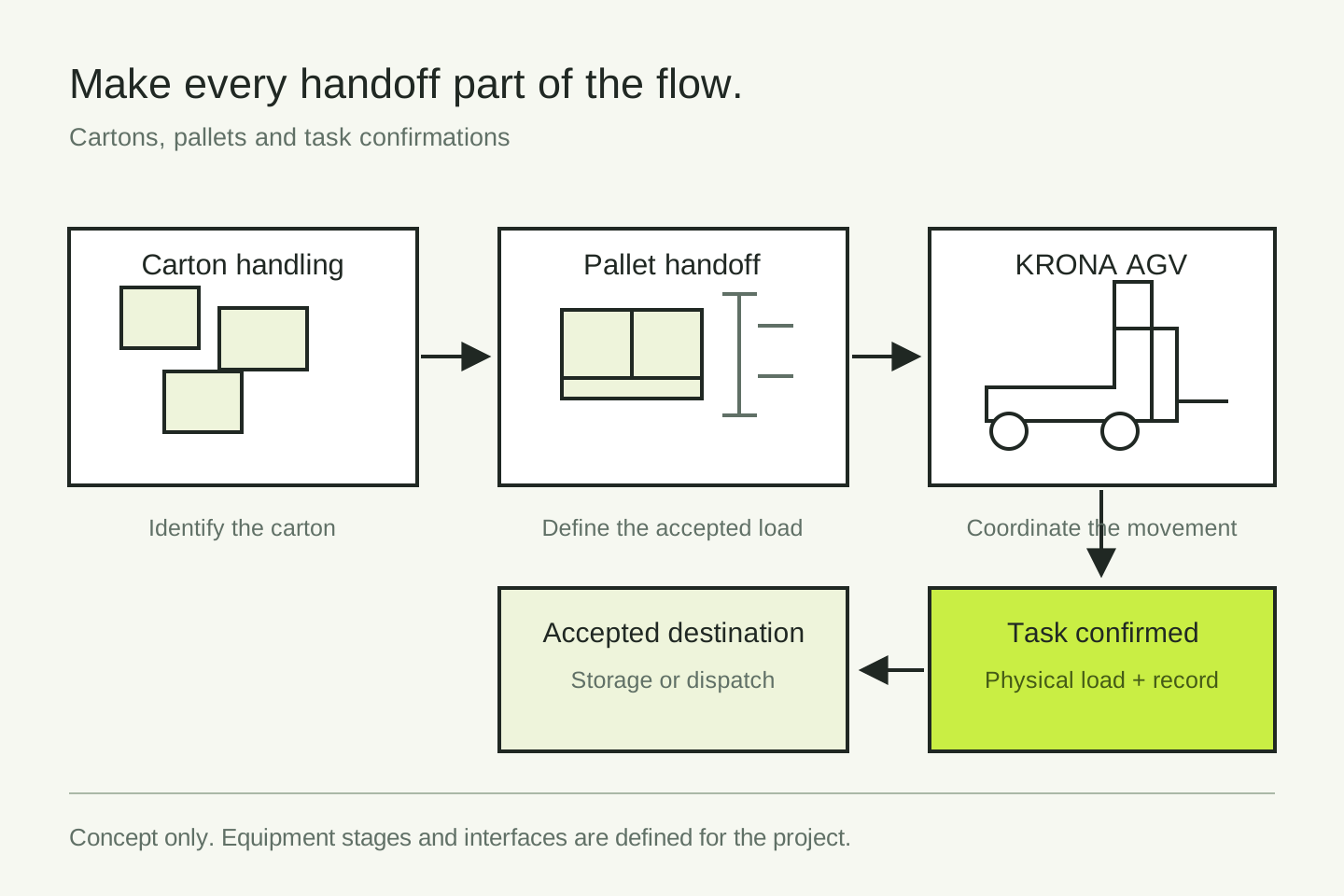
Start with a simple material-flow map. Mark where individual cartons become a pallet, where a pallet is opened and where labels, quantities or condition are checked. A robot that moves a pallet does not perform the carton work inside that load.
For receiving, one application may move cartons directly from KRONA U1 to an accepted pallet position. Another may need conveyor scanning, sorting, a buffer and a separate pallet-building stage. Select the route around what receiving must confirm before the goods move onward.
For outbound loading, describe the pallet source, how the next carton becomes available, the conveyor or transfer position and the placement order in the vehicle. The same equipment can be used sequentially only when the schedule and task changeover support that arrangement.
Record the load position, dimensions, transfer height, access and available space at each interface. Then define the information that permits the move: load identity, source ready, destination available and confirmed completion.
A shared control plan should name the equipment controller, vehicle or fleet manager and warehouse system involved in each decision. Define which system owns the task and the stock record, rather than allowing several systems to assume that a movement succeeded.
Include ordinary recovery cases in the interface brief. A robot stopping with a carton, an occupied pallet position or a delayed delivery needs a known next action. Decide who can release, cancel or repeat the task and how duplicate movements are prevented.
List the time spent extracting, identifying, transferring, building, exchanging and transporting loads. Include the portion of the shift when each resource is actually available. Peak robot speed and peak vehicle speed do not establish the completed-line rate.
Buffers can absorb temporary interruptions such as pallet exchange or a short occupied destination. They do not solve a receiving stage that is continuously slower than the material arriving. State what happens when a buffer is full and who resumes the flow.
Use the same demand profile to compare one vehicle, a fleet or staged work. Include charging, shared routes, waiting, other warehouse duties and the return movement. The model should show the required output and the work that remains for operators.
An integrated KRONA proposal should distinguish carton handling, any palletizing or depalletizing stage, conveying, pallet transport and software integration. Name the hardware, interfaces and commissioning work included in each part.
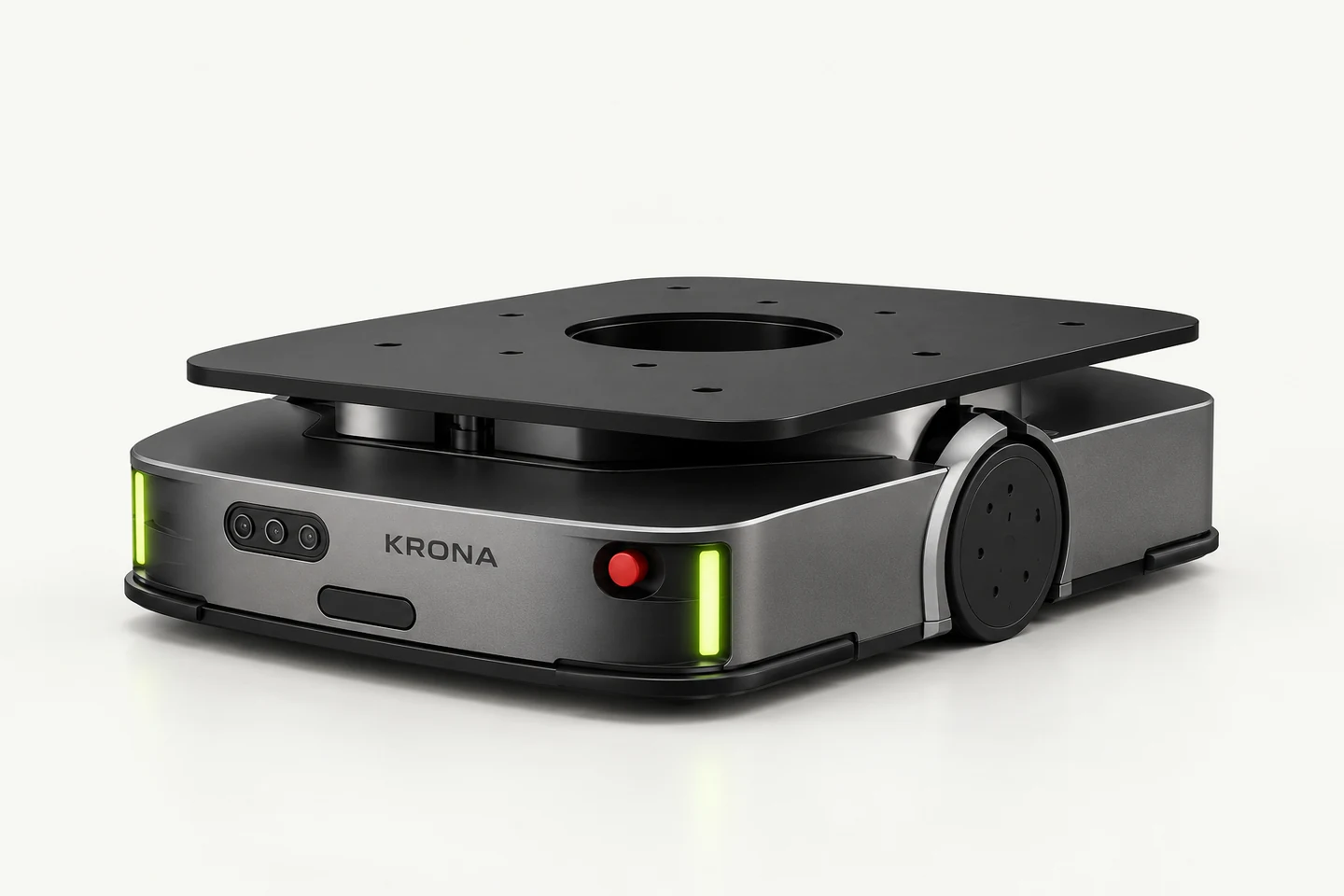
KRONA-branded AGV forklifts are selected for the pallet task. U1 carton handling is assessed against the filled carton and working geometry. A combined proposal connects those selections; it does not assume that every available vehicle, robot or software interface is interchangeable.
Agree an application test covering the start and end of the completed job. Useful measures include accepted carton or pallet output, correct task records, assistance, queueing and recovery after an interrupted handoff. Commercial and support terms should refer to that defined system.
The system proposal identifies the equipment and model scope, integration lead, handoff responsibilities, software work, capacity assumptions, commissioning and service. Compare the same completed workflow when evaluating alternatives.
Discuss a warehouse systemAssess floor-loaded carton unloading and container loading with boxes supplied from pallets or conveyors.
Review KRONA U1Match the AGV forklift configuration to pallet pickup, delivery, storage access and the route between stations.
Explore autonomous forkliftsDefine the carton infeed, accepted pallet pattern and exchange process before releasing the finished pallet for transport.
Assess carton palletizingWhere loads rest on compatible stands or carriers, assess an under-load lifting robot and the station geometry instead of assuming a fork pickup.
Explore lifting AGVsUnderstand which work belongs to carton robots, vehicles, picking systems and storage.
Connect receiving and replenishment without confusing them with order picking.
Include client freight profiles, shared docks and the contract period.
Qualify the environment, goods and equipment model before choosing the flow.
KRONA assesses a combined workflow using its carton-handling and KRONA-branded AGV/forklift range. The proposal defines the equipment, interfaces and responsibilities for the required carton and pallet movement.
Pallet pattern planning, sequencing and accepted load rules are defined within the project scope. Direct carton placement on a pallet does not establish a complete mixed-order pallet planning system.
Start with the existing task and stock-record process. KRONA scopes the required interface and confirmations around it. Any software changes or replacement are a project decision, not a prerequisite stated by the name warehouse AGV system.
Share roughly how much you need to move. We’ll get in touch to discuss the possibilities.
info@kronarobot.com