
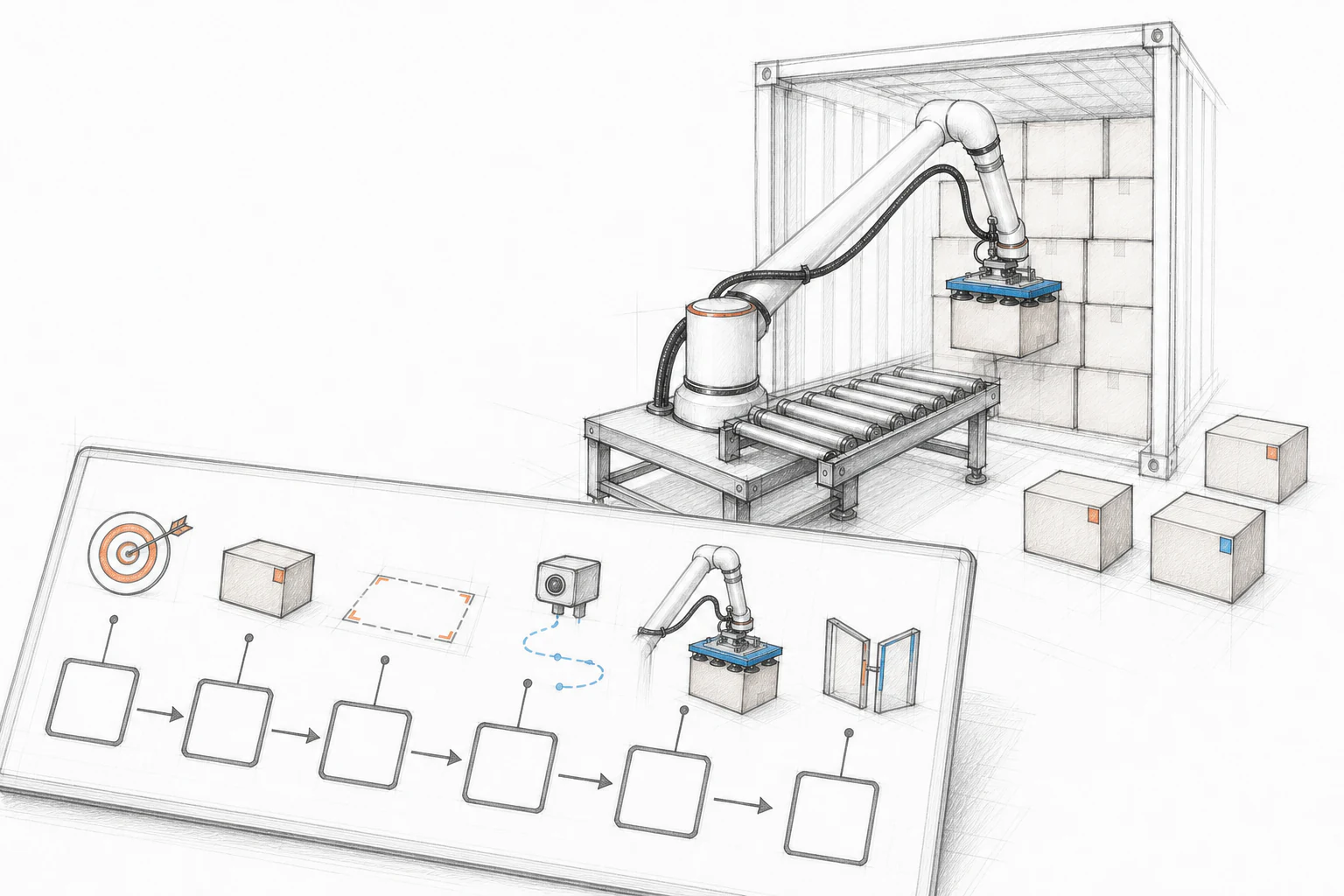
A robotics pilot should answer a specific operational question. A successful demonstration alone does not establish whether the system can integrate safely into a shift, what share of eligible freight it will handle, or how much human time exceptions will require.
Use this checklist during planning, before the test starts, and in the final results review.
1. Define the decision you will make
- One primary pilot question is written down.
- The post-pilot decision owner is identified.
- The results required to continue, adjust, or stop are agreed.
- Technical feasibility is separated from the commercial deployment decision.
For example: “Can the system safely handle the selected package profile with no more than the agreed operator-assistance time?” This is more useful than asking whether the robot works.
2. Capture the current operational baseline
- Complete duration is measured for several representative loads.
- Active unloading, stops, and dock waiting are separated.
- Labour-hours are recorded for every participant.
- Package damage and additional handling are counted.
- Variation between shifts and loads is known.
Use the same process start and finish for both the manual and robotic scenario.
3. Select representative freight
- Package types reflect their actual frequency in the operation.
- Normal dimensions, weights, and surfaces are included.
- Realistic deformation and damage are present.
- Packaging intentionally outside the pilot boundary is labelled.
- The process for unknown or ineligible objects is confirmed.
A test with specially selected convenient cartons can validate a component, but it cannot support an operational decision.
4. Check the site and interfaces
- Dock, door, and working-area dimensions are measured.
- Floor condition and the equipment-positioning method are confirmed.
- Power, network, and lighting requirements are documented.
- Conveyor or handoff-point capacity is verified.
- Pedestrian, forklift, and vehicle routes are planned.
- Equipment storage before and after testing is defined.
Photographs are not enough when centimetres determine feasibility. Verify critical dimensions on site.
5. Approve the safety plan
- A risk assessment covers the specific test location.
- Working and restricted-access areas are clearly marked.
- Emergency stop and safe-state behaviour are tested.
- Authorised entry and restart responsibilities are agreed.
- Unstable freight, dropped package, and power-loss scenarios are documented.
- Operators understand the test sequence and reporting process.
Pilot scheduling must not shorten the safety review.
6. Assign ownership
- Customer and supplier each have one pilot lead.
- Dock and freight preparation ownership is clear.
- A safety decision owner is named.
- One person records data and validates its quality.
- Technical-support hours and escalation path are defined.
- A short daily results review is scheduled.
A one-page responsibility map reduces waiting when the test needs a quick decision.
7. Agree measures in advance
- Complete unload time and dock occupancy.
- Count and share of packages completed autonomously.
- Eligible-package flow per active operating hour.
- Exceptions by category.
- Active operator minutes per load.
- Stop and recovery duration.
- Package damage or drops.
Give every measure a formula, data source, and person responsible for confirmation.
8. Set test and stop rules
- The order of freight tests is known.
- A minimum number of runs is defined.
- Conditions for pausing to investigate are agreed.
- Conditions for stopping due to safety or damage risk are agreed.
- Configuration changes are logged and results are kept separate.
If settings change after every carton, the result does not represent a stable system configuration.
9. End with a decision
- Results are compared against the starting baseline.
- Verified facts, assumptions, and open questions are separated.
- Eligible and ineligible freight boundaries are documented.
- Site, integration, and operator requirements are estimated.
- The next stage has an owner and target date.
- If the project stops, the reason is recorded clearly.
A pilot remains valuable when the answer is “not yet.” Documented boundaries prevent premature deployment and show what product or process changes would be needed before another test.
- pilot checklist
- warehouse robotics
- deployment planning